

Designing effective demand response
A review of behavioral insights, consumer engagement, and operational strategies in energy systems
By Duc “Steve” Vu, assistant professor of supply chain management at the University of Michigan-Flint School of Management
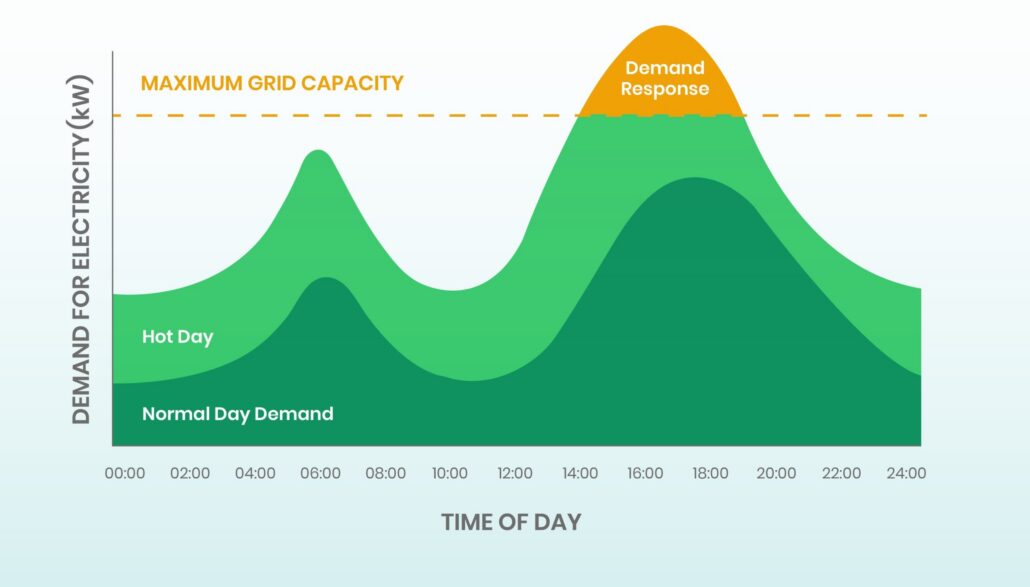
Demand response programs are systems that utility companies use to encourage households and businesses to reduce or shift their electricity use when the grid is under stress, typically during peak usage times. Rather than producing more energy, these programs aim to manage how and when people use electricity, making the grid more stable and lowering costs.
Traditional designs often assume people will respond in logical, predictable ways to things like price changes or incentives. In reality, many ignore these signals or refuse to change their routines, possibly because they misunderstand how the program works or think it is too much hassle. Because of this, programs that fail to consider how real people behave usually are not as effective.
Complexity is a big hurdle. If a program is confusing or seems like a lot of work, most people will not sign up — or, if they do, they’ll eventually stop participating and return to old habits. So, keeping things simple is key.
To make participation more likely:
- Give clear, straightforward instructions from sources people trust.
- Make pricing and potential savings easy to understand, like showing a comparison “shadow bill” that illustrates what they would have spent on the new plan.
- Use visual cues like smiley faces or stars to highlight benefits in a way that is immediately intuitive.
- Make joining the program as easy as possible; automatic enrollment with the option to leave can drastically increase involvement.
Not everyone responds the same way:
- People’s ability to adjust their electricity use depends on factors like their income, daily schedules, and whether they have access to smart home technology.
- Tech-savvy folks may want lots of data and control. Others might prefer programs that run automatically without much effort.
- Programs should be flexible, offering different participation options to appeal to a wide range of households. Importantly, they should make sure lower-income families are not left out.
Technology helps, but is not enough:
- Smart meters, apps, and automated appliances make it easier to participate, but people need motivation, trust, and clear information to stick with it over time.
- The best programs combine tech tools with strategies like reminders, social proof (i.e., showing how neighbors benefit), and personal feedback on energy use and savings. When people can see the positive effects and feel supported, they are much more likely to keep participating.
To inquire about Steve Vu’s research, please email him at ducvu@umich.edu.
Reference
Vu, D.D., Hussain, A., Vu, D.M., Zhang, X., & Bui, V.H. (2026). Designing effective demand response: A review of behavioral insights, consumer engagement, and operational strategies in energy systems. Energy Research & Social Science, 131, 104474. https://doi.org/10.1016/j.erss.2025.104474