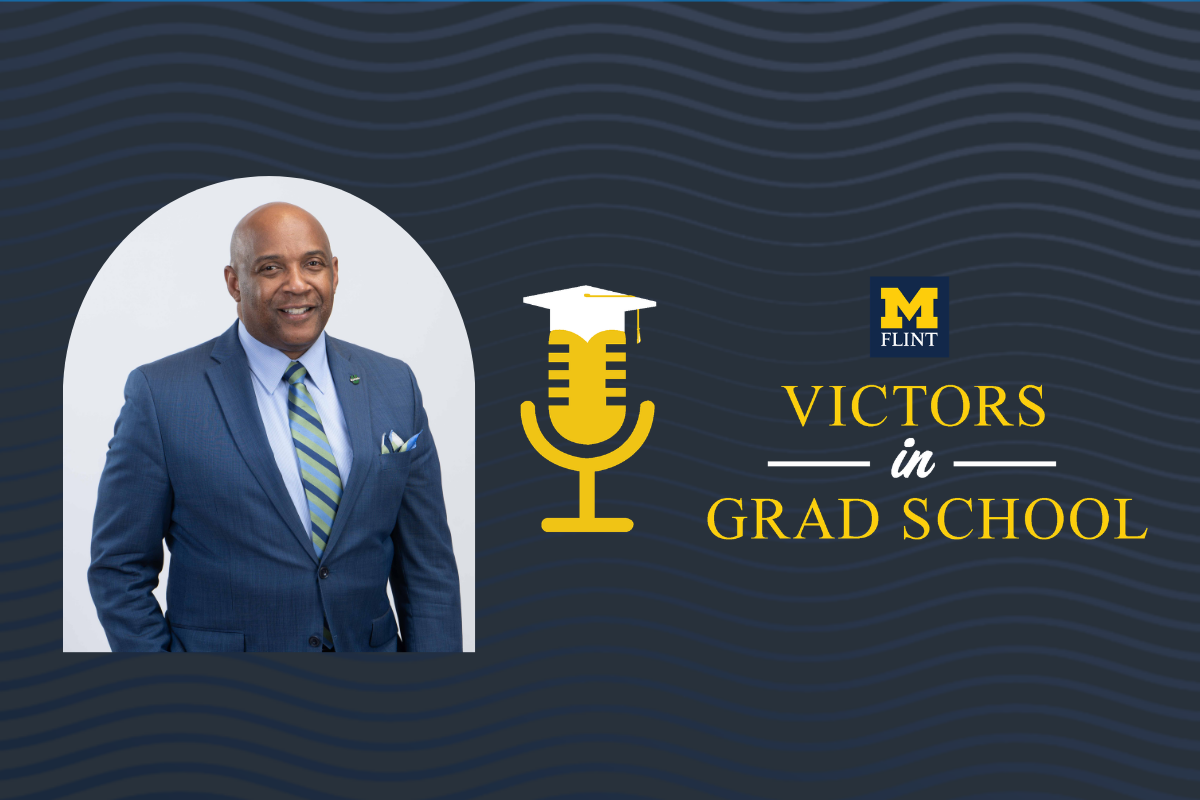
If you’re considering graduate school—or searching for inspiration on how to thrive once you’re there—the latest episode of “Victors in Grad School” is a must-listen. Host Dr. Christopher Lewis welcomes Dr. Bennie Harris, Chancellor of the University of South Carolina Upstate, to explore the transformative journey that advanced education offers. Their conversation is packed with wisdom, practical advice, and deeply personal stories that illuminate the many paths one might take through graduate school and beyond.
A central theme from the episode is that the graduate school journey is unique for everyone, but learning from the experiences of others can help smooth your own path. Dr. Bennie Harris shares how his initial pursuit of engineering was driven by practicality, but his true passion for education and empowering others ultimately shaped his career. Even after obtaining his undergraduate degree, Dr. Bennie Harris realized he wasn’t finished learning. His return to academia began with an MBA—chosen strategically for its flexibility across education and the private sector—and culminated with a PhD focused on strategic service marketing.
Throughout the conversation, Dr. Bennie Harris emphasizes the importance of building relationships. He credits the people he met during his studies—professors, classmates, and mentors—for helping him grow intellectually and personally. These connections provided support, challenged his perspectives, and contributed to his ongoing success. Graduate school, he argues, shouldn’t just be about credentials; it should be about becoming the best in your craft and using new knowledge to support and uplift the communities you serve.
Another powerful message is the value of adaptability and curiosity. Dr. Bennie Harris encourages listeners to approach each stage of their graduate journey with an “empty cup”—ready to learn, unlearn, and be challenged. He shares actionable tips for navigating the politics and expectations of graduate programs, including fostering transparent communication with advisors and embracing goal-setting with room for revision.
The episode wraps up with advice for those weighing graduate school: Don’t just chase degrees for prestige—pursue programs that elevate your thinking and make a broader impact. Use graduate education as a means to innovate, collaborate, and give back.
Ready for a dose of motivation and real-world guidance? Listen to this episode of “Victors in Grad School” and let the journeys of those who came before light your way. Your future self—and your community—will thank you.
TRANSCRIPT
Dr. Bennie Harris [00:00:01]:
Welcome to Victors in Grad School, where we have conversations with students, alumni, and experts about what it takes to find success in graduate school.
Dr. Christopher Lewis [00:00:11]:
Welcome back to Victors in Grad School. I’m your host, Dr. Christopher Lewis, Director of Graduate Programs at the University of Michigan Flint. Really excited to have you back again this week. And as always, every week we have a great opportunity to be able to work together as you are preparing yourself, For this journey that you’re on. And I call it a journey because it is a journey. Every person that is thinking about graduate school, that is in graduate school, are going to go through the process a little bit differently. No one person’s path is going to be exactly the same as another, but you can learn from others in what they found out in their own journey to help you in your individual journey.
Dr. Christopher Lewis [00:00:52]:
And that’s why this podcast exists. Every week, I love being able to talk to you to help you to be able to gain some tools for your tool belt.
Dr. Bennie Harris [00:00:59]:
Yeah.
Dr. Christopher Lewis [00:00:59]:
toolbox and allow for you to be able to learn from others that have gone before you, that have gone to graduate school, been successful, and found some things that have worked for them that could work for you. And today we’ve got another great guest, and I’m really excited to be able to have him here with us today. Dr. Bennie Harris is with us today, and Dr. Harris is the chancellor of the University of South Carolina Upstate campus. And I am— I got to hear him speak at a recent conference that I was at, and I was really excited to be able to have come and talk to you about the educational journey that he went on and some of the things that he’s learned in his own journey through graduate school and beyond into the work that he does now in education. Dr. Harris, thanks so much for being here today.
Dr. Bennie Harris [00:01:45]:
Thank you so much, Krista, for allowing me and inviting me. It’s an honor to be here and talk about education. Education is really important to me. So thank you again.
Dr. Christopher Lewis [00:01:52]:
Well, I really appreciate you being here and spending some time with us today. And one of the things that I love doing as I start these opportunities to talk is to really Turn the clock back in time. And I know that you did your undergraduate work at Mississippi State University. And when you were there, you were an engineering major, got that undergraduate degree in industrial engineering. And at some point after graduation, you had an inkling. You had an inkling that you weren’t done. Take me back to that period of time where you were out in the workforce, you just— and you said to yourself, you know what, I’m not done. I need to go back to school.
Dr. Christopher Lewis [00:02:28]:
What was going through your head?
Dr. Bennie Harris [00:02:29]:
I made a decision to go back to graduate school while I was an undergraduate. And actually, the way that happened was I had been an engineer. I was at co-op for a year. I had did another summer program at Mississippi Power and Light Company at co-op, and I’d come to learn enough about myself during this time in college to realize that engineering was not my passion. However, I had gone so far in and had invested so much time into it, it was not prudent to make a change. And so I did work as an industrial engineer for a brief time, but I immediately found a course back to higher education. I was going to get a master’s degree in student personnel. Actually, I wanted to be a math teacher.
Dr. Bennie Harris [00:03:09]:
And Mississippi during my time, you know, you did say let’s go back. And so we’re going way back. And Mississippi during my time, educators were not paid much. And so growing up poor rural community, and it was more prudent for me to follow my intellectual skills of science and mathematics and pursue engineering and to get a pathway out of poverty. But along the way, I kind of found my passion. And my passion really was empowering other people, particularly the peers that I were around. So I got excited about that. I was going to change my major after my junior year to education.
Dr. Bennie Harris [00:03:41]:
I took all my records over to the College of Education, and the way they were structured, it was going to take me another 3 years to graduate. I had to go and do all these prereqs. I said, nope, I’m not going to do that. I’m going to go ahead and stay focused and get my engineering degree. And so I came to a place where after I graduated, trying to figure out how to get back into higher education, A mentor of mine invited me back to be her graduate assistant. Before that took place, she took a job at Washington State University, and she then had opportunities available in her office. She was at the time the director of affirmative action special programs, and so she had a compliance coordinator. I was good at statistics and other types of technical skills, and so she thought that my skills aligned with the work, and so she offered me an opportunity.
Dr. Bennie Harris [00:04:23]:
So I went out to Washington State sight unseen. and became the best compliance and EEO coordinator I could be. I learned as much as I could about the law, about the Office of Federal Contract Compliance, the Office of Civil Rights, the Office of Equal Employment Opportunity, and you would have thought I was an expert. At least I presented myself that way. So that’s kind of how I got on that tread. And when I got into that, I knew I wanted to get a master’s degree. So Washington State paid for employees while I went to school, so I decided to get an MBA in strategic marketing.
Dr. Christopher Lewis [00:04:53]:
So talk to me about that, because there’s lots of— I know Washington State, and Washington State’s a big institution, so you have an opportunity to go into a lot of different directions. You chose, like you said, to do the MBA. Talk to me about that decision. What was the reason for you that you decided that versus something else?
Dr. Bennie Harris [00:05:10]:
Well, what I came to realize while I was at Washington State University doing the work that I was doing, I was also was able to follow my passion around student empowerment. So I started a leadership conference called Black Male Orientation to Leadership Development where I was developing young men across the state of Washington, and it became a conference that was over Washington, Oregon, Idaho, Montana, and we had a few folks coming from California, and we ended up having about 600 young people to come up across those states to develop leadership. And so I was able to do that part of my passion. Our president was supportive of that, my boss was supportive of that. At that time I had promoted, etc., and I was becoming much more focused around the business of education. And so I didn’t treat affirmative action or EEO or compliance like the regular compliance agenda of an institution. I approached it more as a partnership with our deans, with our colleges, And so what I realized is that higher education did not do a good job at marketing itself even then. It didn’t do a great job at telling the story, did not do a great job at— and the word telling the story was not the word in terms that we used during that time, but really bringing people along and saying, here’s the why.
Dr. Bennie Harris [00:06:31]:
So Washington State was under an Office of Federal Contract Compliance They had had an audit, they had failed that audit, and they had to recreate some of their policies. And they recreated because they just weren’t following their own processes. So, so I went to the deans and I went to the vice president and said, what is it that you want to accomplish? Let’s create policies that are legally viable and policies that accomplish that. So we would do a partner’s accommodation. Where if you recruited someone in biochemistry who— and coming out to Pullman, Washington, it was not a metropolitan, so we had to get as much workforce as we can. Then if he or she had a partner and they needed a job, then if there was a position available within the institution, then that the institution needed— let’s say that partner was in a faculty in criminal justice. Or something like that, then the Provost’s Office will give 2 years of funding for that Criminal Justice Department to hire that faculty on a temp appointment, and then that person will be competitive for a permanent job in that particular college. So it increased our ability to elevate diversity at the institution, and it— instead of our search committees doing a workaround the search process, I became more of a partner.
Dr. Bennie Harris [00:07:57]:
That really helped me to understand that we need to be a lot more strategic in how we talk about our partnerships, how we talk about elevating. And I wanted to position myself if I wanted to go back into engineering at any point. So I said an MBA could do both. It could align with higher education and it could align with any future aspiration I potentially may have when I decide I want to make some money. So I’m still thinking about that too.
Dr. Christopher Lewis [00:08:24]:
Now, before I get into it, because I want to talk about these transitions that you’re making, but I also know that a number of years after you got your MBA, you made a decision to keep going with that education, and you decided to get a doctorate degree. Talk to me about that and what made you decide that you wanted to jump back in after a few years. off of not being in education in that, in that regard?
Dr. Bennie Harris [00:08:52]:
I think that’s what graduate school really offers. As you pivot and as you grow and mature and become more informed as to where your passions are and who you are and what your aspirations— and that changes. I’m one that believes that as you set goals, that you give yourself permission to edit those goals. And so annually I will look at my goals and my wife and I will look at goals and that banned affirmative action, etc., in admissions processes in California. And so kind of saw the writing on the wall, and I had— I did my project, a project in my MBA with Weyerhaeuser Corporation in Tacoma and total quality management. And I was looking to say, okay, I’m going to go back into industry and do total quality management. The president, Sam Smith, at the time, and my the Vice President for Institutional Advancement, Connie Kravis, had appealed to me to stay at the institution and to see if there was anything else across the institution that I wanted to do other than where I was, right? And so Connie was trying to recruit me into Institutional Advancement because I was working with her in my other capacity to help increase the diversity and the gender representation across her division in advancement. And that went exceptionally well.
Dr. Bennie Harris [00:10:36]:
We— people would say, well, we can’t find them, we can’t get them. And we’ve been extremely successful at Washington State in recruiting highly talented people to Pullman, Washington, in the Palouse. We had deans who were of color. We had a woman vice president for business affairs. We had a woman provost that came along. We had all of these executives of all diverse backgrounds. that were coming and attracted to Washington State, and it debunked the myth that nobody will come, that we can’t get them, right? So she said, Bennie, I think you’ll be a great fundraiser. And I’m like, you know what, I have no interest in being a great fundraiser.
Dr. Bennie Harris [00:11:14]:
I got to be very careful what I say because this is a live podcast. I have no interest. My image of being a fundraiser was Driving Miss Daisy, and I did not see myself pushing no old gray-haired women to the symphony to ask them for money. That was just not in my cup of tea. So she sent me to a case conference to learn about fundraising, and I went to this case conference at Dartmouth, this training, a week-long training. And they had all the— they introduced us to annual giving, planned giving, corporate and foundation relations, major gifts, principal gifts, all the different areas of institutional advancement, prospect research. And then I came back and talked to her executive team, and she said, if we offer you a job, what would it be? I said, if I did it, it would probably be corporate and foundation relations because I have an engineering background. I write relatively decently.
Dr. Bennie Harris [00:12:06]:
I think I can appeal and make a case for why industry should invest and foundations should invest into our institution. So she offered me a job on the spot to do that, but because I didn’t have experience in this space, professional experience. I had volunteer experience, etc. I came in as an associate director for corporate and foundation relations, and then I, as I proved myself, I quickly promoted. Now I share that because what I was looking for at that time was a change. I was looking for a change, and I wasn’t quite sure where I wanted to go, but I know I was young. I was recently married and I knew that I needed more income or I wanted more income. So I was thinking about going back to industry.
Dr. Bennie Harris [00:12:51]:
I even thought about going to law school. And I was looking at going across the country. My wife and I had— they’d only had our first child. And so I was like, I gotta get to a place where I can work and go to law school. And then I was going to do corporate law and litigation, those type of things. And it was Had to be January. I had done the— I had done my LSAT, had done a decent job on taking that. I had done Kaplan, all that kind of stuff.
Dr. Bennie Harris [00:13:22]:
I had interviewed, and not formally interviewed, but I had went to several law schools, met with deans, met with the people in the admissions committee. And in January of 1996, that desire was completely taken away from me.
Dr. Christopher Lewis [00:13:38]:
Why?
Dr. Bennie Harris [00:13:39]:
I had zero desire— though, in January of 1997, right? I had zero desire to do law because it wasn’t what my passion— I was motivated by money, but it wasn’t what my passion was. So, um, I got a job offer in the summer because my wife wanted to go back to— we had had our first child, she wanted to be closer to Mississippi where her family was, and I had committed to do that for her after me being 7 years in the Pacific Northwest, she being 5 years there with me. We took a job at the University of Alabama at Birmingham, and that’s— it was there that I decided on a PhD because I was doing external affairs and advancement work to support their campaign. But what I recognized is that people did not appreciate what was happening in higher education, and we had legislators who were writing legislation that was anti-higher education, and they spent 4 or 5 years with us And how is it that we did not make them evangelists for what we do and our value? Their kids were— had degrees, they had degrees, yet they were writing legislation that said a 4-year degree in higher education was not necessary. And I’m saying necessary for whom? Everybody else? Your kids, but no one else, right? So, so that made me get my PhD. I was going to get it in strategic marketing to look at marketing higher education institutions, and UAB did not have a PhD program, so I had to get it through the graduate school. I did a joint program with UA and UAB that I did my dissertation, my research on service quality, looking at how do you elevate and assess quality and the value proposition for a service environment, something that you don’t own a product. but you own the experience and you own the credential of that.
Dr. Bennie Harris [00:15:30]:
And so that’s what influenced me to get my PhD. And as a result of that, I thought, okay, I’m gonna now be on a platform where I can do research, I can write, I can become an advocate for higher education, and I can help higher education institutions pivot how they tell their story, how they market themselves, and how they create alliance with this dedicated captive audience during these 4, 4 to 6 years that you have them. So when they graduate from us, they’re going to go out and tell everybody how great we are and go straight into the legislators or into industry and be our biggest advocate. That was my vision for that.
Dr. Christopher Lewis [00:16:08]:
Now, you went to 3 different types of institutions. And as you go from one type of institution to the next, from different levels into different types of colleges, schools, etc., You have to go through transitions. The transition from undergrad into your MBA, your MBA into your doctorate, and in between you’re doing work and getting other experiences. But as you transition into those educational environments, there are different expectations. There are different perspectives from faculty. Your faculty are definitely, as I said, they are going to be expecting different things from you as an individual, and you have to figure out what those— both the written rules and the unwritten rules are as you’re moving through those, those specific types of degrees. So talk to me about as you transitioned into your MBA, into your doctorate degree, what did you have to do to set yourself up for success before you got in and as you started the program? And what did you have to do to maintain that success throughout each of those individual degrees?
Dr. Bennie Harris [00:17:19]:
So one of the things— thank you, that’s a great question. One of the things that was consistent through my whole experience, educational experience, is people. People were consistent, and how I work and engage people and the relationships I built. I have wonderful relationships still to this day from undergraduate faculty and staff and colleagues all the way through this. So I have folks all over the United States. and over the country— globe, rather— that Stefan Wagner, he’s a professor at Zurich. I have Chi-Wei Lo. All these folks I met during my educational experience that I kept in touch with.
Dr. Bennie Harris [00:18:00]:
Jeevan Rago, executives. He was from India. So, and we still talk to this day, and we’re talking 30-plus or longer, about 30-plus years, right? where you belong, being able to navigate that. I think at the podcast I talked about my mother teaching me to live with an empty cup, and having that empty cup in these relationships was very critical. Then going to the Pacific Northwest where the state was less than 2% African American, and Seattle was probably about 6% at the time, and the first African American I saw in Washington State in Pullman became my best friend, probably. So, so that mattered. But what it did for me was help me to challenge my own biases, helps me to challenge how I see things, helped me to have this empty cup, come in there with that where people can pour their authenticity into me, and for me to step away from my own biases, uh, that I brought to that conversation, to that encounter, became the thing that made me better, became the thing that, that, that allowed folks to invite me to the table, right? Those are things that I learned as a person maturing as a young man and going to professional session— a professional setting in my career. I’m starting to mature.
Dr. Bennie Harris [00:19:44]:
I’m starting to see life differently. I’m starting to see that my story doesn’t corner the market on oppression, and there were other people who have oppressed stories. that they’ve overcame and that giving them respect and deference to that and to their victory out of those things or their culture out of those things really only empowered me and strengthened me and strengthened my voice in telling my story by embracing the legitimacy of theirs. Whether I think it’s legitimate or not, to them it is legitimate and I learned to embrace that and not judge it. One of the best examples of that, I think her name was Beth friends, so I’m putting names out there. But she was the director of the Women’s Center at Washington State University, and I had just come from Mississippi. Everything is formal— ladies and gentlemen, yes ma’am, no ma’am, all this kind of stuff. And so I did a speech for a Martin Luther King program, and I opened it, ladies and gentlemen.
Dr. Bennie Harris [00:20:38]:
After that speech, uh, I think Beth came up to me. I think this was Beth. And they— she said, I am offended by that. I said, what? What did I do? She said, I am no lady, and I don’t need you to open doors for me. I don’t need you to do this, and all this kind of stuff. Because there was a bias in my Southern culture is that women have certain roles. Now, I didn’t think I discriminated against women, but she helped. When she and I sat down, she explained to me, said, Bennie, when you were born, you have— you were— I don’t think we called it unconscious bias then.
Dr. Bennie Harris [00:21:11]:
You were given a Tonka truck and a blue shirt, and your sister was given a doll and a pink blanket. And we were setting the expectations around your role in society whether you realize it or not. So she educated me around that unconscious bias that I, as a man, may have, right? What does that have to do with me pivoting all these graduate experiences? Everything. Because I took that experience of having to deal with my advisors, my faculty at Washington State University in the MBA program, and was extremely successful there. When I came to the University of Alabama at Birmingham, and I had these advisors who had their own expertise, and none of them had necessarily had the expertise that I was looking to research, except I had an advisor from the College of Business. I had to help them to get their own biases out of the way as I try to pursue my PhD. So what I learned to do, and I tell folks that, young people that are all the time, that the best degree is a finished one. So I had to get out of my way, right? And, and, and so my doctoral thesis dissertation wasn’t about trying to change the world, but how do I take this funnel and narrow it down and find this little piece that I’m going to research? And so when I talk to this advisor, he wants to see me this way, and I talked to this committee member, they want to see me this way.
Dr. Bennie Harris [00:22:35]:
So what I did from the very beginning, I will send a memo. To every last one, every committee, every meeting I had with any of my academic, my committee members, I was going to follow up with a memo. Thank you, Dr. Lewis, for a great conversation. Per our discussion, I would do X, Y, and Z. This aligns very well with what Dr. So-and-so told me, and I’m going to integrate that, and I will send you all a revised version. So what I was trying to do, what I was doing, I think, was taking away the politics, mitigating, not taking away, mitigating the politics of her PhD among your committee members and create accountability among themselves, among the committee, so that they wouldn’t be sending me this way and they send me that way and I’m looking like a chicken with my neck cut off and I’m frustrated and I’m in the room crying.
Dr. Bennie Harris [00:23:19]:
I’ve got anxiety around that. I just made them a part of my council, part of my committee. I’m not a committee, but a part of my tribe. And that tribe was how do we move this particular PhD candidate, student first and then candidate, through this process in the most seamless way. So I completed my PhD working full-time. Actually, I just did a post about it this past Sunday, working full-time with children, with the wife who was working on her master’s degree. I did it all, what has taken an average of 7 years. I did it in right at 4 years.
Dr. Bennie Harris [00:23:56]:
And I did it, and it was a very, very successful, positive one. I completed it, defended, and I had colleagues that were still struggling after— who were in my cohort, who were still struggling with their PhD until I stopped following them. So I don’t know if they got it or not. I probably should go back and figure that out. But it had all to do with being able to Appreciate the culture that you’re in. Appreciate the setting and the expectations of others. And how do those expectations align with my aspirations? And then bringing that through conversation with your advisor, with your committee members, having conversation with them more than just transactional conversations, but having conversation about their aspirations to bring them into your story and make them a part of what you aspire to do and what you are going to do. So they can say, I had a little part in what he became.
Dr. Christopher Lewis [00:25:02]:
Now, each of your education opportunities that you took advantage of were a little bit different.
Dr. Bennie Harris [00:25:07]:
Yeah.
Dr. Christopher Lewis [00:25:07]:
They were in different type of educational environments. They were at different types of institutions and at— and in different areas.
Dr. Bennie Harris [00:25:15]:
Yeah.
Dr. Christopher Lewis [00:25:15]:
So talk to me a little bit about Now, I mean, you’ve completed your degrees, you’ve had those done for a while, you’ve continued to grow, and you’ve had other educational opportunities as well. But how do you feel that your graduate degrees helped prepare you for the role that you’re in now and how you may be pulling from that on a daily basis?
Dr. Bennie Harris [00:25:39]:
Oh, if I If I was a fortune teller or soothsayer, I would say that I was able to see all of this in the future, but I did not. And what all of this means is there is so much value into an educational leader understanding P&L, understanding budgets and finance. That’s everything we do. Every decision is made around, do we have the money for it? Can we afford it? What are the revenues that are coming to this institution? from the state, from the federal government. Is that revenue pivot? How do we put some of these projects that were on soft money onto some of the recurring dollars? How do we create ROIs for new program ideas? How do we— all of that you do not want. It is so powerful and empowering to be able to lead an organization, understand the finance behind it. That was my MBA program, right? It was so empowering to be able to know how do I negotiate all the noise of what’s in higher education. There was a time when we can count the number of MBA programs in our region.
Dr. Bennie Harris [00:26:44]:
Now there’s so plethora that you can’t count it. So how do I amplify USC Upstate in such a way that our program is seen and heard among the many, many, many programs that are out there? Hence my PhD And my emphasis in service marketing, strategic service marketing at University of Alabama. So that PhD helped me to look at my institution as a regional public university and say, how do I differentiate our institution from the others? That’s one of the things that led me into having a podcast and a podcast. I’m focusing exclusively on leadership. And I’m bringing them to the table, folks like CEOs from, from industry, nonprofits, educational, talking about USC Upstate. Then I have those podcast conversations transcribed and put into the business journal throughout the state of South Carolina. And so people are reading that. So I get calls from Charleston, I get calls from Columbia, I get calls from all over the state of South Carolina saying, I didn’t know USC Upstate was doing that.
Dr. Bennie Harris [00:27:54]:
Or saying, how can I get on that podcast? I never imagined that to be those type of ancillary benefits, but I did know that I needed to get my message out. I did know that I need to amplify our voice as an institution and say, look and see what we’re doing. I write monthly op-eds around education, around the changes that are taking place, around the value of education, around first-generation students every month. and the local paper, which has a far-reaching— the Post and Courier has a far-reaching regional arm. So people are beginning to see— I believe my role as a higher education leader in today’s market is to not just impact my regional market and my local market, but also impact how people see us nationally and see the value of education nationally. The value of education It’s so critical, and what I am so committed to as an educational leader, passionate about what I do, is that we, we do not dumb down our intellectual capacity as a country, that we don’t move everything away from innovation and from research and from— even though we’re not a research university, but that is, that’s what gave, that is what gave us our competitive advantage, that we invite intellectual knowledge to the table wherever it comes from, globally, That’s what happened in World War II. That’s what happened in all— it wasn’t just our intelligence that made us competitive. It was that of Jewish people, it was that of other scientists, etc., all around the globe, right? So I’m very leery when we swing too far saying technical colleges are all what we need.
Dr. Bennie Harris [00:29:38]:
We need to make sure people can do forklifts and have— can have a be able to drive trucks, etc., etc., knowing that within a couple years those trucks are going to be driving themselves remotely. And so we have now educated a complete workforce on driving trucks and we have displaced that workforce. Much of what probably happened in Flint and many other places in, in your region around automation, etc. So we tool people for these skills and then we develop technology that make those skills irrelevant. That’s where education and higher education has to step in and make sure we are seen and say our voice is more than just that. And then we have to make sure that we don’t see us ourselves as not knowing how to deal with people and culture and humanity and listening and communication. All those humanities are so critical to making us a civilization. And that’s what I think graduate school— let me take it back to where we started.
Dr. Bennie Harris [00:30:37]:
That’s where I think graduate education is so critical. is because it elevates our awakening to say, what else should we be thinking about? Who else should we become? And how do we continue to learn at a higher and higher and higher level so that we can maximize our society in the very best way possible?
Dr. Christopher Lewis [00:30:58]:
Now, as you think back to your graduate education and what you’ve gone through in your past, and you think about others that are thinking about going to graduate school themselves, What are some tips that you might offer others that are considering graduate education that would help them find success sooner?
Dr. Bennie Harris [00:31:18]:
Um, there are a whole bunch of degrees just to have them. Like, I just want to be a doctor. So, um, and I caution you from absorbing a lot of debt just to be okay. Um, you know, if you need to, if you need that for your ego, then that’s okay. But I think it’s so much more powerful to take it and do what it was designed to do. How do we elevate the thinking of that experience? How do we elevate that space with that particular degree? So a lot of degrees, things that we used to do just to get the certification in, well, we did it because we wanted How do I make this community that I work in better with this particular graduate degree and graduate knowledge? And it happens, and it makes a difference. It causes you to think differently. It causes you to engage differently.
Dr. Bennie Harris [00:32:40]:
And that’s what people have to understand. When you think about when you go into a graduate degree program, you’re going to have peers that are in there with you who are looking for something that makes them better. not just make me a better person, but intellectually more competitive. I want to learn more. I want to increase my curiosity, which when you increase curiosity, increase learning, what that does, it innovates, creates innovation, and it makes society very better, much better. So I think graduate degrees should be looked at or could be looked at as less of a transactional credential to get you that next paycheck or next pay bump and more of one that’s really, really making society better and making this environment, this organization, this job, all those things better. So whether you get your graduate degree in computer science and data analytics or whether you get your graduate degree in music, you’re becoming the best at your craft and we don’t want society to lose that. We do not want young people to be okay being mediocre.
Dr. Bennie Harris [00:33:52]:
And we want people to go through a graduate program that is developed and coached by intellectuals so that you can know what this— how to use this knowledge that you are acquiring, how to make it even more effective, how to make it smarter, those things. So it’s an and. You’re going to get it to continue to improve yourself professionally, get a better job, all of those, and use it to improve folks and people around you. I’m not saying go and say, I got a graduate degree, so I’m better. No, that’s not what I’m saying at all. What I’m saying is that a graduate education should equip you to see things differently and to see where you can improve those things and where you can contribute, to see how you can have different type of conversations with people, to bring them together, to get that training intellectually, to have more understanding about culture and about experiences so that I can come better prepared with an empty cup to receive that, what I’ve learned.
Dr. Christopher Lewis [00:34:58]:
Well, Dr. Harris, you mentioned just a little bit ago that you have a podcast called Below the Line, and I’m sure that that’s one of the best ways for people to get a hold of you. But tell me a little bit more about, or tell us about a little bit more about Below the Line. And where people can find it if they want to learn more.
Dr. Bennie Harris [00:35:16]:
Well, below the line really is really what we’re talking about when we, when we lead, when we make decisions. Oftentimes, and I, I coined this term, but I can’t take complete ownership of it because I heard it initially from a previous president that I served under, and he was a conflict manager. He did conflict management. And so part of what we were learning is when you do fundraising, for example, and I come and ask somebody to make a commitment to this institution and they have something to say, well, yeah, I’ll do that. And it’s, it is, it’s minuscule in comparison to their capacity. When you talk to them more, you start learning what’s really below that conversation. What is really, what are they really passionate about? They could have been had pain associated. Their son got kicked out of school, at that same school that you’re asking them to give money for.
Dr. Bennie Harris [00:36:14]:
That’s keeping them from making that bigger gift. So that was the context which I kind of came to appreciate that term below the line. I added leading. How do we lead? When I come to an organization and I have this great vision and it’s not moving the way I think it should move, what’s going on? Well, people could have PTSD from prior relationships, from a prior chancellor, from prior experiences. So I got to get below the line so that I can get them to make these types of decisions. So the whole thing is, how do you lead when you don’t know what the issues are that’s keeping your team from moving forward? That’s what Below the Line is all about. And you can listen to that on— it’s on Spotify, it’s on YouTube, just Below the Line, Chancellor Bennie Lee Harris or Bennie Harris. or Below the Line USC Upstate, and it should pop up on a number of, uh, uh, venues, whatever they call it.
Dr. Christopher Lewis [00:37:09]:
Well, Dr. Harris, I just want to say thank you. Thank you for your time today, for your— for you sharing your own background. And I am— I’ve definitely listened to a few of the episodes already in Below the Line. They’re very powerful episodes, and you have some really amazing guests on there. So as you said, it What you’re talking about does connect with what we’re talking about here. So I highly encourage you to listen and to check it out for yourself. But Dr.
Dr. Christopher Lewis [00:37:37]:
Harris, thank you for being here, and I truly wish you all the best.
Dr. Bennie Harris [00:37:41]:
Thank you very much, Kristin. I appreciate your inviting me, and I love the conversation. Thank you.
Dr. Christopher Lewis [00:37:45]:
The University of Michigan Flint has a full array of master’s and doctorate programs if you are interested in continuing your education. Whether you’re looking Whether you’re looking for in-person or online learning options, the University of Michigan-Flint has programs that will meet your needs. For more information on any of our graduate programs, visit umflint.edu/graduateprograms to find out more. Thanks again for spending time with me as you prepare to be a Victor in grad school. I look forward to speaking with you again soon as we embark together on your graduate school journey. If you have any questions or want to reach out, email me at flintgradoffice@umflint.edu.