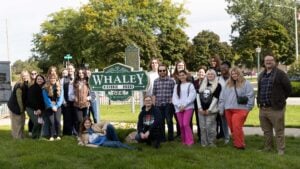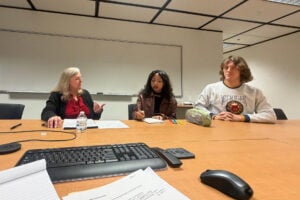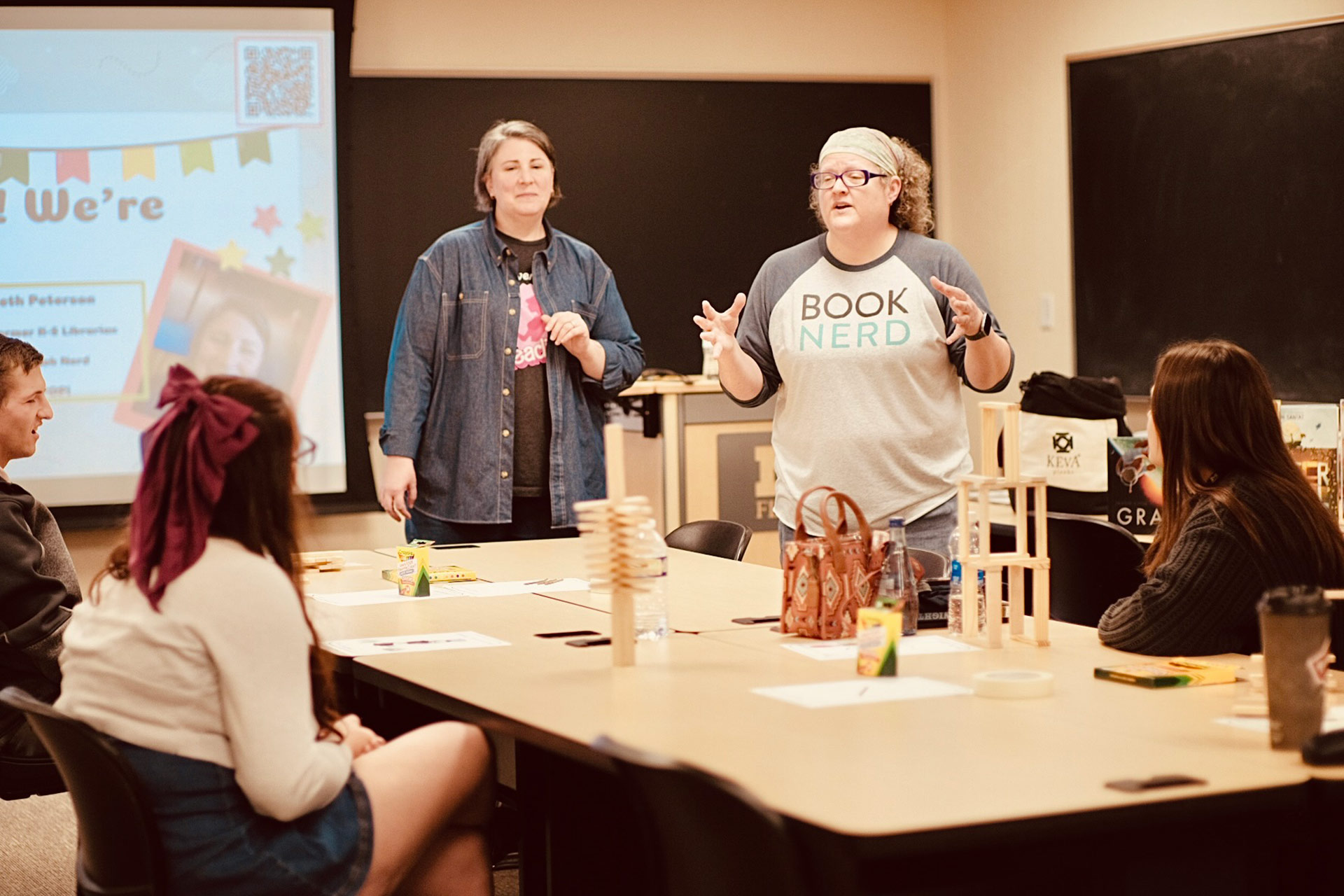
Dozens of future educators gathered on the University of Michigan-Flint campus on April 17 for the Future Teacher Academy, a professional development day held each semester as part of the Education program’s core curriculum. In concert with coursework and the Educator Preparation Program’s field placements in area schools, the FTA creates a ripple effect that extends beyond the campus — equipping Education students with practical strategies, research-informed practices, and community connections that reach into classrooms, households, and the broader Genesee County community long after graduation.
The daylong event brought together a keynote speaker who focused on innovative approaches to classroom dynamics, local educators, literacy advocates, technology specialists, and Education alumni for a series of presentations covering classroom behavior, restorative practices, educator wellness, literacy education, and instructional technology. Presenters included practitioners from Flint-area schools and organizations, reflecting the program’s emphasis on building sustained partnerships between UM-Flint and the surrounding K-12 community.
Keynote speaker Adam Holland closed the day with a session based on his book, “Thinking Outside the Prize Box: Navigating Challenging Behaviors in Today’s Classroom,” which challenged attendees to move away from traditional reward-and-punishment systems in favor of approaches grounded in relatedness, autonomy, and competence.
Holland said the engagement he encountered from UM-Flint students stood out from the start. “My address involved quite a bit of audience participation, and the students leaned in throughout, sharing their lived experiences, grappling with new ways of seeing and understanding, and asking the kind of challenging questions that make it clear that they are working to assimilate these new elements with their burgeoning teaching practice,” he said.
Holland noted that the conversations extended well beyond the session itself. “The conversations I had following the keynote that day and the ones I have had since via email have shown me that the students who participated were not content to passively receive new knowledge but are working to actively apply that knowledge, shaping how they interact with and teach their own students.”
Heather Harrison, representing the Flint & Genesee Literacy Network, presented on community-based approaches to literacy under a “crinkle-to-wrinkle” framework — one that spans adult literacy, family learning, and K-12 student outcomes. Her session highlighted the network’s direct programs, including the Volunteer Tutor Alliance and a two-generation ESL program, and offered future educators practical pathways to connect students and families to local resources.
“Meeting the UM-Flint Education students and learning about their individual goals, subject interests, and ideas was what I enjoyed most about the Future Teacher Academy,” Harrison said. “They showed up engaged and curious. They were attentive throughout and asked relevant, practical questions, especially around family literacy and how best to support students by engaging the whole family in learning.”
Harrison said she left the event encouraged by what she observed. “They’re asking the right questions, and they seem genuinely interested in understanding the bigger picture of what impacts student learning outside the classroom. It gave me a lot of confidence in the impact they will have in their classrooms and within their communities once they are established in their professional roles.”
Delilah Smith, a K-12 literacy and dyslexia consultant with the Michigan Multi-Tiered System of Supports Technical Assistance Center, led a session on educator wellness, focusing on burnout prevention and compassion fatigue. Smith noted that while passion is among the strongest motivators for entering the profession, 44 percent of teachers report feeling burned out often or always.
“Burnout is not inevitable,” Smith said. “With the right supports in place, teachers can maintain their enthusiasm and commitment over time — allowing them not only to thrive personally, but also to make a meaningful, positive impact on their students’ academic, social, emotional, and behavioral well-being.” She described UM-Flint’s students as “thoughtful, engaged, and genuinely invested in their future as educators,” adding that their willingness to reflect on their own beliefs during the session “added depth to the discussion and created a collaborative learning environment.”
Susan Kelsey-Brewton, a science teacher at Hope Academy in Detroit and the 2025-26 Regional Teacher of the Year for Region 10 in Michigan, led a session on restorative practices. “I enjoyed their level of engagement — 100% — as demonstrated by their willingness to participate in the activities that I planned for them,” she said. “I believe that they received many positive takeaways that they could implement, and I enjoyed interacting and relationship-building with them.”
Anna Tansery of Smart Tech held a hands-on session exploring interactive flat-panel technology and student-centered learning using tools such as SMART Boards and Lumio software. “I really loved having the opportunity to showcase the hands-on nature of SMART Boards and interactive software,” Tansery said. She noted that students asked thoughtful questions about balancing screen time and incorporating technology in meaningful rather than passive ways.
For the Education students who attended, the day left a clear impression. Nathan Malone said a session on classroom relationships prompted personal inquiry. “I reflected on a personal experience from kindergarten, when my teacher attended an arts award ceremony where I had received recognition for a coloring contest. That feeling of being supported in that moment left a lasting impression on me. I hope to carry that lesson forward as I step into the role of teacher.”
Fellow student Molly Voelker said the event reinforced her commitment to continued growth in the profession. “One of my biggest takeaways is that you never stop learning as a teacher,” she said. “I plan to carry that mindset into my classroom by staying open to new ideas, reflecting on my teaching, and always trying to be better for my students.”
Like any great event, the Winter 2026 Future Teacher Academy would not have been possible without the dedicated work of Tracy Foster, Shamarion Grace, Sam Hilbert, Audrey Scribner, Emily Wilson, and Sadé Wilson. The team looks forward to working together again on next semester’s FTA.