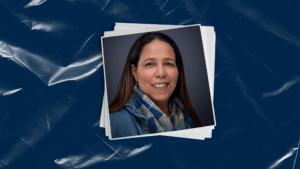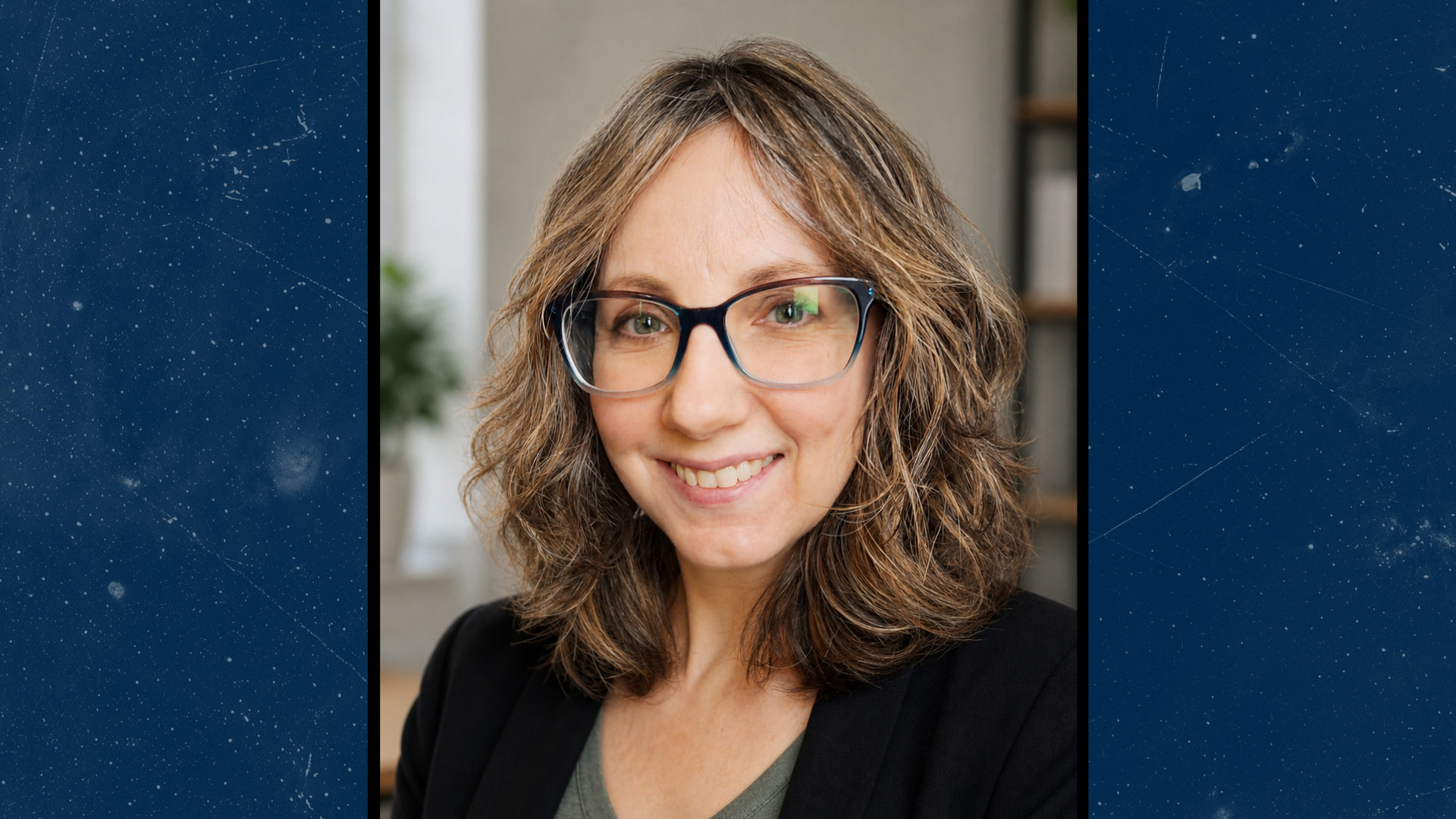
Lecturer IV in Psychology
Psychology Club Faculty Advisor
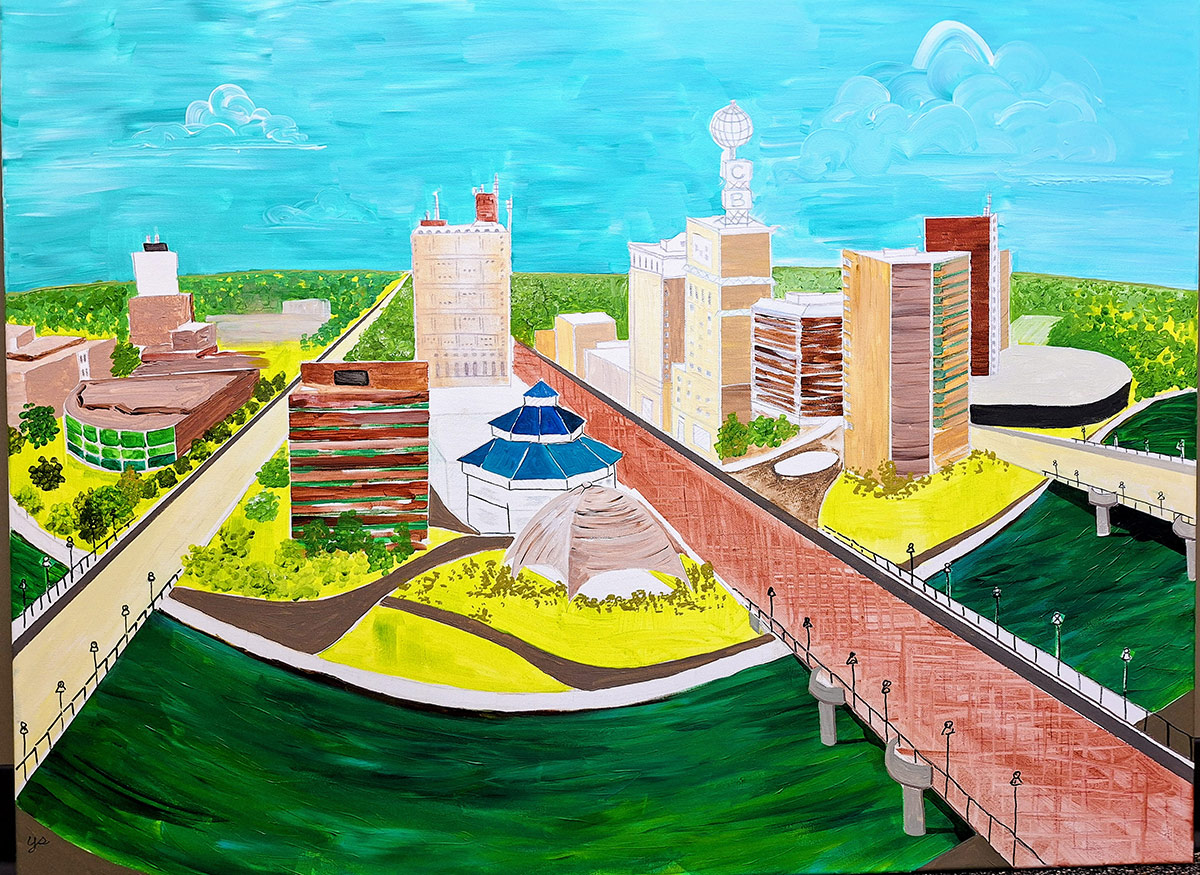
Amanda Smith’s story begins at Flint’s McLaren Hospital, where she was born while her family lived in Chesaning, about 40 minutes north of Flint. At 3 years old, they moved to Flint’s east side near Burton, where she graduated from Kearsley High School in 1994. Today, she teaches psychology at the University of Michigan-Flint — the same university where she earned her bachelor’s degree — just ten minutes from where she grew up.
“This is my town, and these are my people,” she says. “I am Flint in a lot of ways.”
Amanda’s family history goes back to Flint’s 1950’s auto boom. General Motors’ promise of a middle-class life lured many families to the area, including her grandparents. One grandfather, a World War II Air Force veteran, worked in the coal mines of West Virginia before heading to Flint for better work, leaving his family behind until he could afford to move them to Michigan. At just 18 years old, Amanda’s father, having a new wife and child on the way, left high school early to work at Buick City, where he worked for more than 30 years. Her mother was a homemaker until her three children, of whom Amanda is the youngest, were in school. At that time, she began working at the local Meijer until she enrolled in the Dental Assistant program at Mott Community College, where she graduated with honors. Both of Amanda’s parents were determined to give their children opportunities they had not had, including the privilege of pursuing a bachelor’s degree, which led both Amanda and her older brother to attend UM-Flint in the 1990’s — the first time any of Amanda’s family had attended a 4-year university.
Having been an artist since middle school, Amanda began her journey at UM-Flint as an art major, intending to pursue graphic design. Psychology found her the way it tends to find people — gradually.
“It started slowly, the way that a lot of psychology students come to the major, in that they first take a couple of courses, because why not?” She found that she enjoyed her first psychology courses, and performed well, so she kept going until she had a minor. The turning point came when she realized that making art her career might cost her something. “From an artistic perspective, I did not want to make it my job, because it was kind of taking away from the value that I put into art,” she recalls.
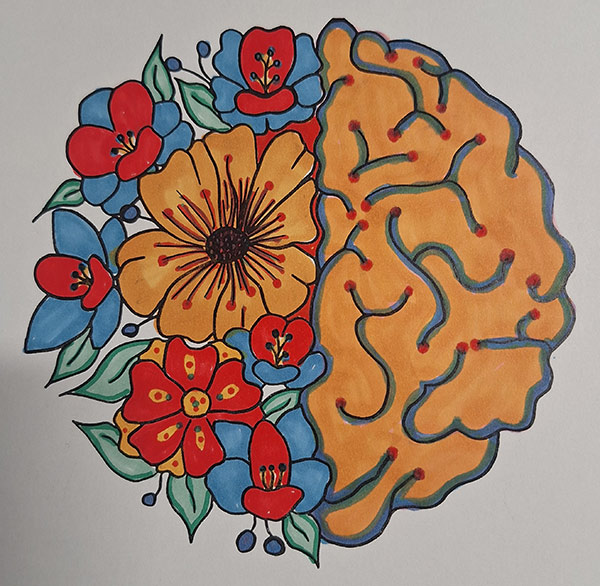
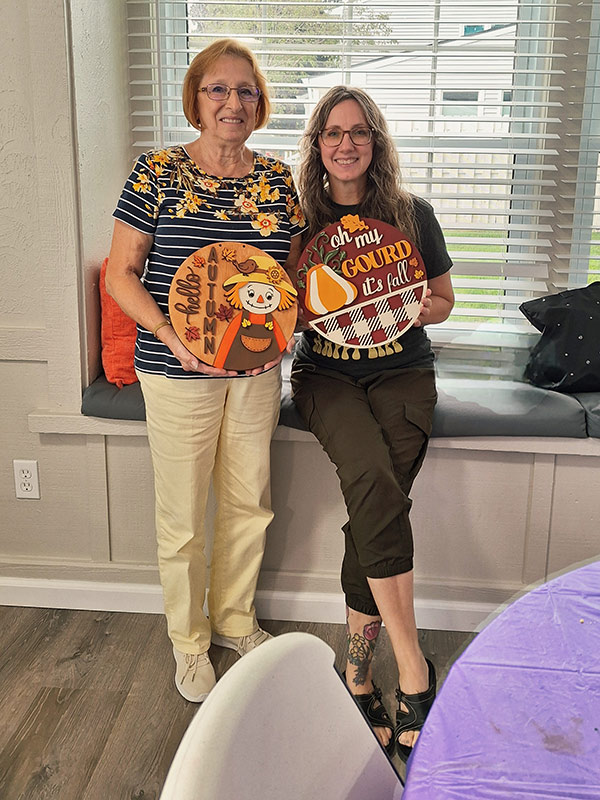
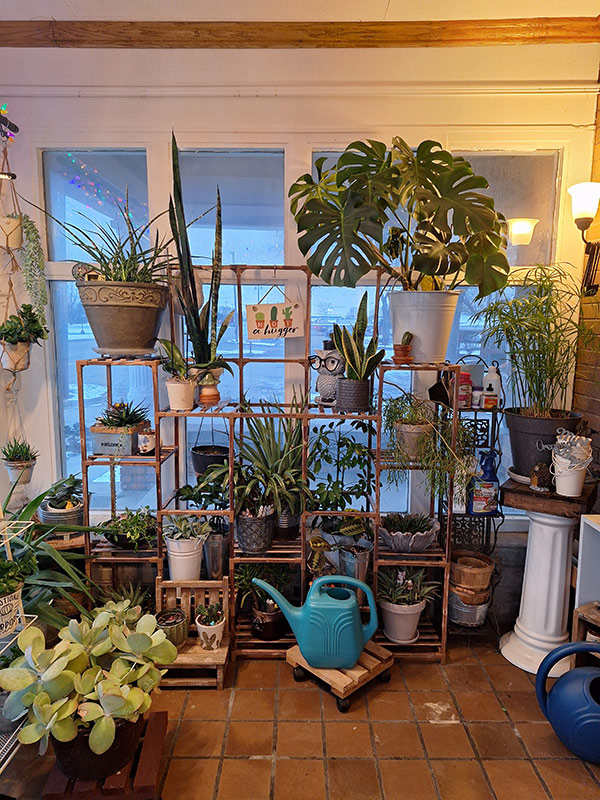
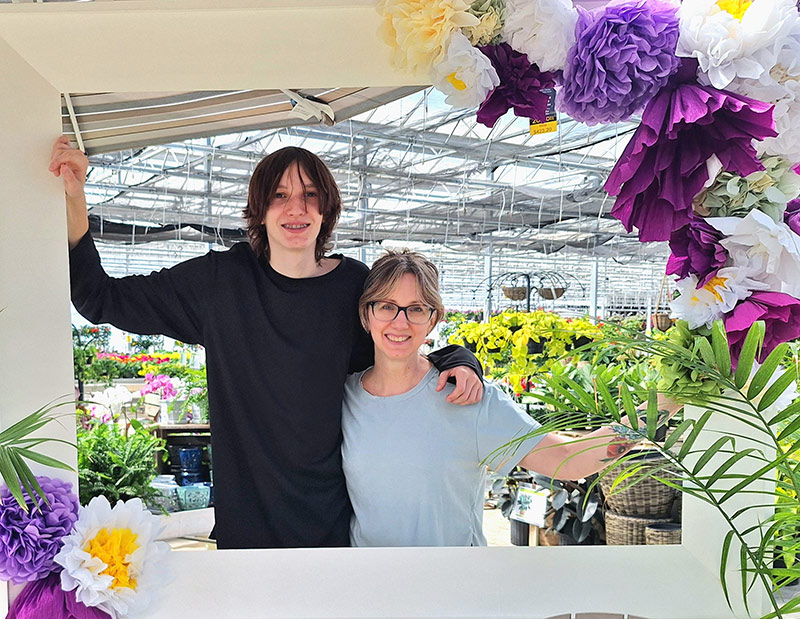
A pivot was in order. “I saw psychology as something that I could do for work, and art as something that I could do to bring meaning and value to my personal life.” That balance still holds. She spends winters doing interior design and crafting, and works weekends at a local greenhouse each spring. “I love it so much,” she says. “I like to not only be part of that outdoor environment, but because I’m a teacher at heart, I also like to teach other people how to take care of their yards.”
Once she committed to psychology, Amanda aimed toward neuropsychological assessment. Her senior thesis focused on it; her doctoral program at the University of Maryland, College Park, specialized in it; and her internship at the VA Hospital in Ann Arbor built on it further. For a while, her path was clear. “Until I was about 30, I thought I was going to be a neuropsychologist, and I was going to do neuropsychological assessment,” she says. “But then I had the opportunity to work in motivational interviewing, and everything changed.”
Amanda joined an NIH-funded research study after her internship, working with substance-abusing adults using motivational interviewing as a therapy technique. She describes motivational interviewing as a humanistic approach that “puts the power of choice and motivation with the client,” helping people “think about the types of changes they might want to make, what is stopping them, how they could potentially overcome obstacles to change.”
Working as part of that study, something became clear. “I realized that I actually enjoyed and felt pretty successful at counseling. I saw the value in it, and saw myself doing that, and finding meaning in building these relationships with people.”
That realization led her to a counseling position at UM-Flint’s Counseling and Psychological Services, where she worked for eight years. Teaching entered the picture through a connection she’d kept alive for years — her undergraduate thesis advisor, Dr. Thomas Wrobel, with whom she stayed in touch throughout graduate school.
In 2007, she sent him one of her regular updates: she was back home in Michigan and doing motivational interviewing work. He had a Psych 100 opening. “He asked if I was interested, and I was. And literally — the rest is history.” She taught at least one course every semester from that point on, eventually leaving CAPS in 2015 to piece together full-time teaching work across two departments, and became a full-time lecturer in the psychology department in 2020.
She’s found a lot to love about it. “I love watching young students see how psychology applies to everything in their life — all their relationships, who they are as a person, and how successful they can be. Whatever their job is going to be, psychology is going to be relevant to them.”
Teaching also gives her something that counseling, for all its value, couldn’t quite match. “I feel that I am helping, actually, more people by teaching up to 150 students per semester — teaching them about themselves and others, and relationships and life and society and all those things. Maybe I am helping them prevent some issues that might have occurred had they not learned the kinds of things that we teach. I felt kind of a greater purpose in helping larger numbers of people per semester.”
She also loves watching students move through their time at UM-Flint. One of her most memorable professional moments came when a student she’d first taught in a dual enrollment class — when the student was in 11th grade — walked across the commencement stage. “I remember thinking, ‘I knew you when!’” she says, laughing. “I felt such a meaningful purpose in that particular person’s life. That continues to stand out to me whenever it happens.”
Beyond the classroom, Smith has spent the past two and a half years helping to develop a proposal for a potential graduate program in clinical psychology at UM-Flint — a project she describes as one of her proudest.
She also advises the Psychology Club and has worked to connect it with Psi Chi, the psychology honor society. The goal is to shift how students see community engagement. “Rather than seeing the club as something they can get something out of, I want them to see it as something we can use to organize and help either the UM-Flint community or the community at large. Because we have skilled students, and there is a lot we can do in the community to share that.”
That sense of investment in community is, for Smith, inseparable from being a Flint native. “The people here are some of the most authentic folks that I’ve ever met. With Flint people, you get exactly who they are. We present ourselves authentically and truly.” She describes a quality in the community that she finds hard to find elsewhere — resilience wrapped in humor. “Within that resilience and grit, there is a sense of humor that is refreshing. Things are what they are, I’m doing my best, you’re doing your best, we’ll get through this together. And that’s what I love about the Flint area.”
She’s excited about where the city is going and believes that UM-Flint can be a catalyst for community improvement by investing in the surrounding area, engaging students in community projects, and providing UM-Flint graduates with opportunities to work and live in Flint and Genesee County.
“I find the continued development downtown very exciting, because it means that investors and people who have money and interest still see this area as something to invest in.” She points to the updated Flint Farmers’ Market, MSU’s presence in the Flint Journal building, and the new YMCA as markers of real momentum. “I’ve seen it where it was a destitute area where nothing was open past 5 o’clock. And we’re not only far away from that, but I still see energy being placed into development. I kind of see a long-term positive era — both for UM-Flint and Flint proper.”
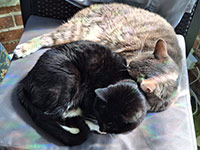
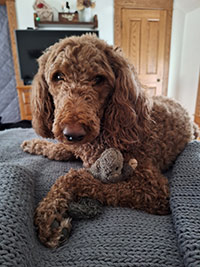
The Smith Home for Wayward Animals
In addition to two cats and three dogs, Amanda’s family has three fish tanks. Here are snapshots of the current residents: