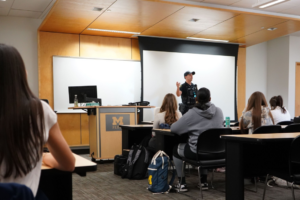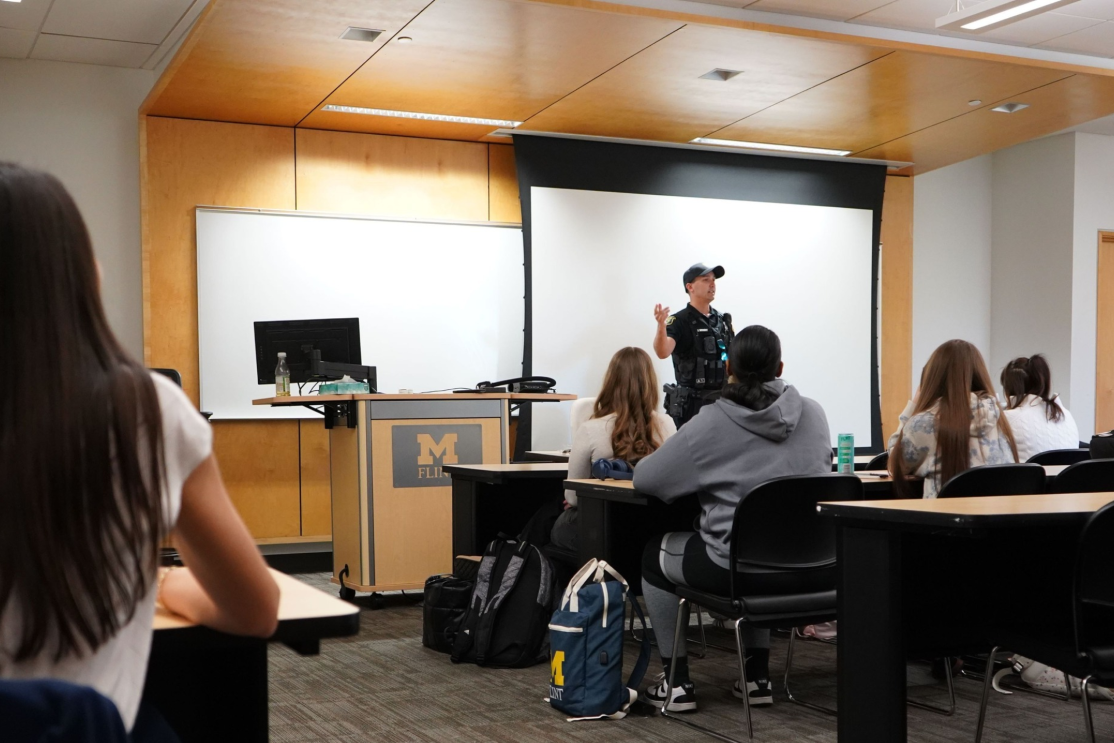
On October 8, 2026, Jacob Wright, a 2017 Criminal Justice and Sociology graduate and current Department of Public Safety Police Officer, returned to the classroom to speak with students in associate professor of criminal justice, Dr. Kimberly Bender’s Introduction to Criminal Justice course. He shared his journey from student to officer, and the skills and experiences that prepared him to be the officer he is today.
“Ten years ago, Jacob was a student at UM-Flint, sitting in the same seats as the students he spoke to about policing, “ Bender said.
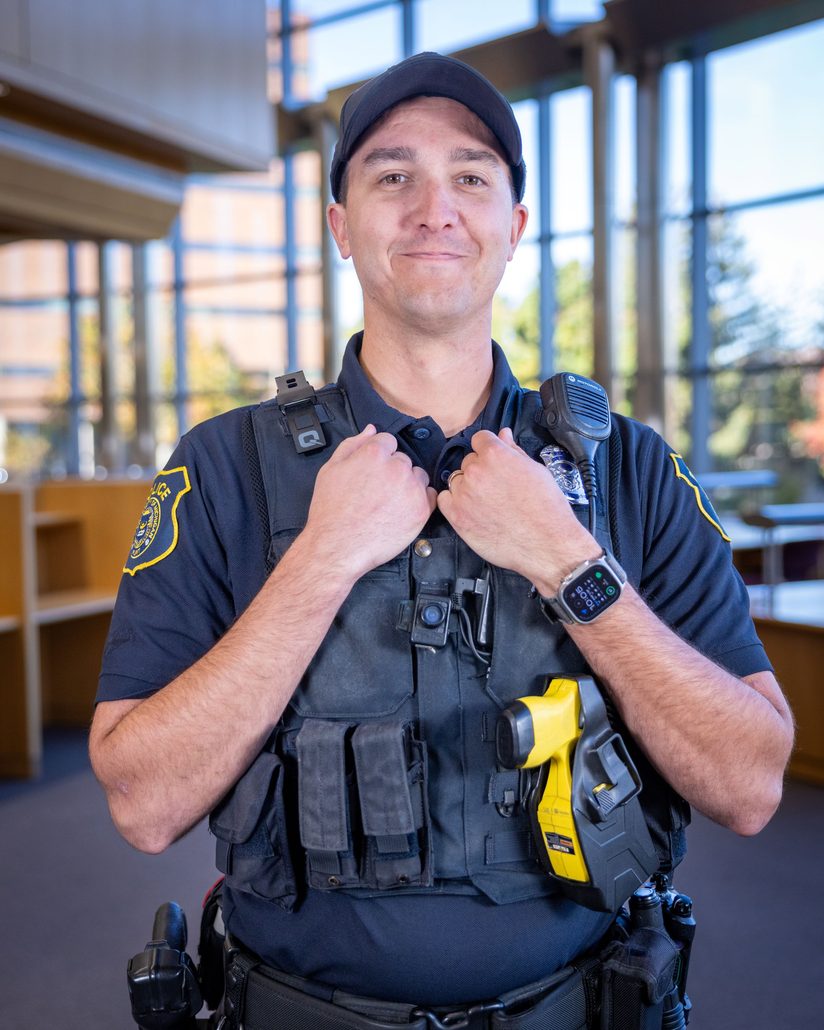
Jacob Wright’s path to law enforcement was anything but conventional. Without family ties to the field or an early ambition to become a police officer, he began his college journey at Eastern Michigan University with plans to study music and pursue teaching.
After transferring to UM-Flint, Wright began working with the Department of Public Safety through its SafeRide program, providing transportation to students across campus. That early exposure sparked an interest in law enforcement that continued to grow.
At UM-Flint, Criminal Justice students explore the interconnected systems of law enforcement, courts, and corrections while developing a broader understanding of the factors that influence crime and public safety. Wright learned to analyze current criminal justice practices from a systems perspective, studied issues like poverty, homelessness, and addiction, and gained a nuanced understanding of why crime occurs, who it affects, and what strategies can help improve public safety.
When Dr. Bender asked Officer Wright which skills are essential to law enforcement, he pointed to two: verbal communication and writing, explaining that officers rely on clear communication to keep interactions with the public calm and fair, and on strong writing to produce accurate, detailed reports.
After earning his Bachelor of Arts in Criminal Justice in 2017, Wright worked as an unsworn security officer with the University of Michigan Health System, then as a police officer at the University of Michigan-Ann Arbor Police Department. These positions helped him strengthen his interpersonal skills as he interacted with individuals and families navigating mental health challenges and difficult circumstances.
Returning to the classrooms where his criminal justice journey began, Wright reflected on taking his first course with Dr. Bender and encouraged students to approach every experience as an opportunity to learn. For those considering a career in law enforcement, he emphasized the importance of asking questions, continuing to build skills, and developing strong writing habits. “You can make a perfect arrest, but if you don’t have attention to detail and can’t write about it correctly, it won’t make much difference,” said Wright.
“The Criminal Justice program continues to strengthen these skills through presentations, group work, simulated scenarios, reflective writing assignments and internships. These experiences help prepare students for the job market, particularly public service careers where communication and writing are essential every day,” said Bender.
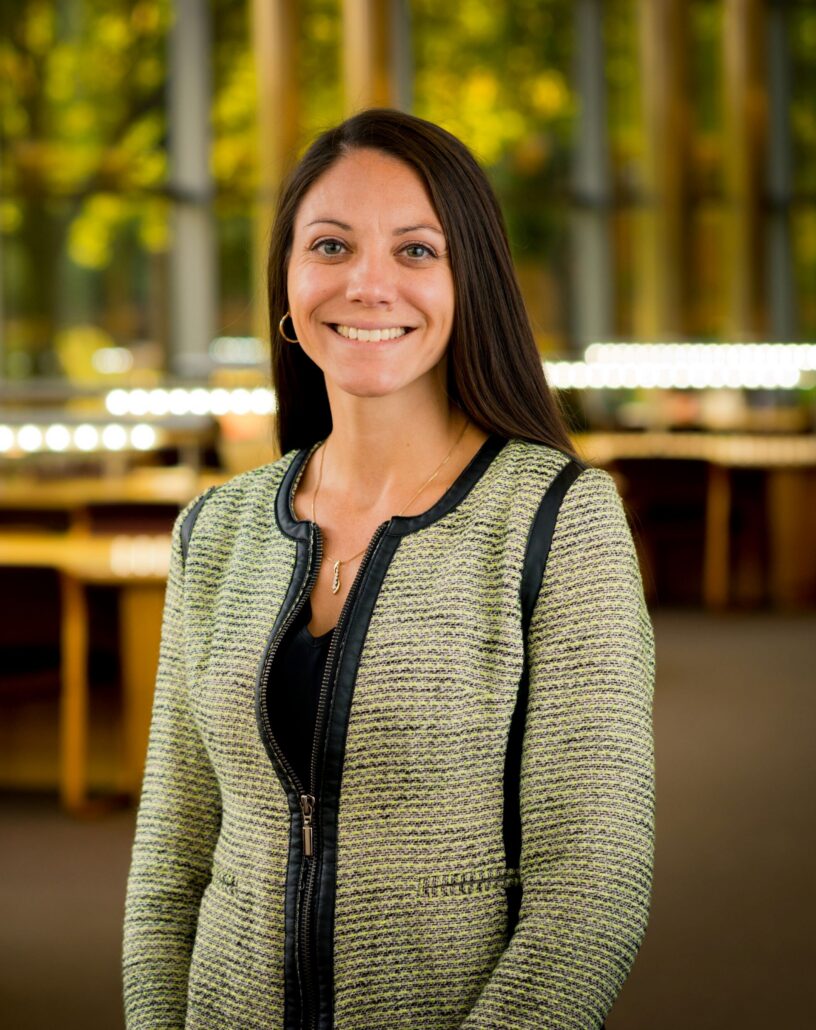
Beyond the technical training provided by the police academy, Wright stressed the importance of adaptability, continued learning and effective communication. Building rapport with people and navigating different situations are essential parts of the job, he explained. “The police academy is great and teaches a lot, but what you don’t learn is how to talk to people, it’s often overlooked but very important to the job itself” said Wright.
Wright also shared an inside look at the rigorous hiring process for police officers, which can include screenings, a civil service test, multiple interviews, and medical and psychological evaluations. Students were particularly interested in learning about the interview questions, and how candidates may be asked similar questions in different ways to assess honesty and intentions. Wright explained that the process helps departments determine if an individual is suited to the demands of the job.
Students asked about the hardest part of transitioning from studies to the field and learned that for Wright, the hardest part was adapting to the schedule. Unlike the flexibility of choosing university courses, new officers may be assigned to overnight shifts or rotating schedules as they begin their careers.
Wright made recommendations for those students looking to pursue the career, including scheduling a ride along with Flint City or Genesee County law enforcement to gain firsthand experience. He shared some insider insight into the best times of year to go, when students would be more likely to see firsthand how unpredictable the job can be. He also shared with students a new program for 14-20 year olds interested in careers in law enforcement. In collaboration with the City of Flint Police Department, Office of the Genesee County Sheriff, Department of Public Safety at Mott Community College, and the Department of Public Safety University of Michigan-Flint, The Explorer Post #810 aims to provide interactive experiences and training to assist students decide when law enforcement is the right career path for them. Wright, along with two other UM-Flint DPS officers, serve as program advisors, to teach, mentor and guide the student Explorers.
After five years with UM-Flint DPS and a recent rotation as the School Resource Officer for the Genesee Early College and Flint Cultural Center Academy, Wright shared experiences as both a DPS officer and an SRO. Wright shared how the SRO position differs from that of a typical officer, as they’re involved in everything, making sure the environment is safe for students from drop off to pick up each day, and building relationships with teachers and students of GEC and FCCA.
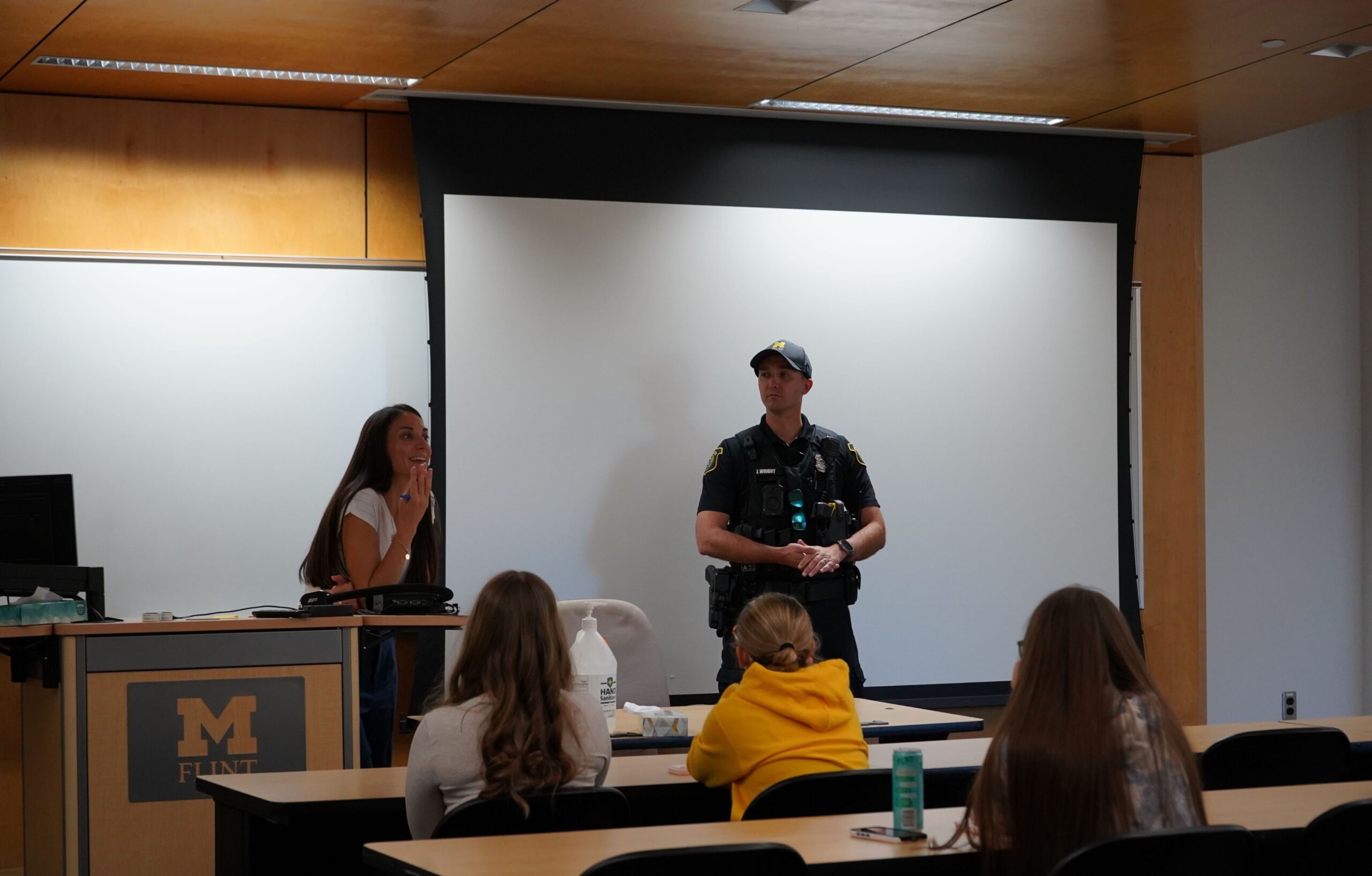
Students engaged in a Q&A, and asked Wright about what coping techniques he employs to manage the sights and scenarios he may encounter. Wright shared with students that consistent therapy has worked well for him, “I have a therapist to maintain and keep myself healthy, not just for when I experience something traumatic”. He also shared that many departments have resources, and UM-Flint has FASCCO for faculty and staff, and CAPS is available to UM-Flint students.
Whether supporting students on campus, building relationships, or navigating challenging situations with members of the community, Wright emphasized that public safety is about more than just enforcing the rules. “The most rewarding part of the job is making small differences for individual people,” said Wright.
Returning to UM-Flint as a DPS police officer has offered an opportunity to share lessons learned along his own path and encourage the next generation of criminal justice professionals. His journey from student to officer demonstrates how classroom learning, hands-on experience and a commitment to serving others can come together in a meaningful career.
“Jacob has grown tremendously since his time in our classrooms, and we are proud of the professional he has become and proud to have him protecting and serving UM-Flint and our students,” said Bender.