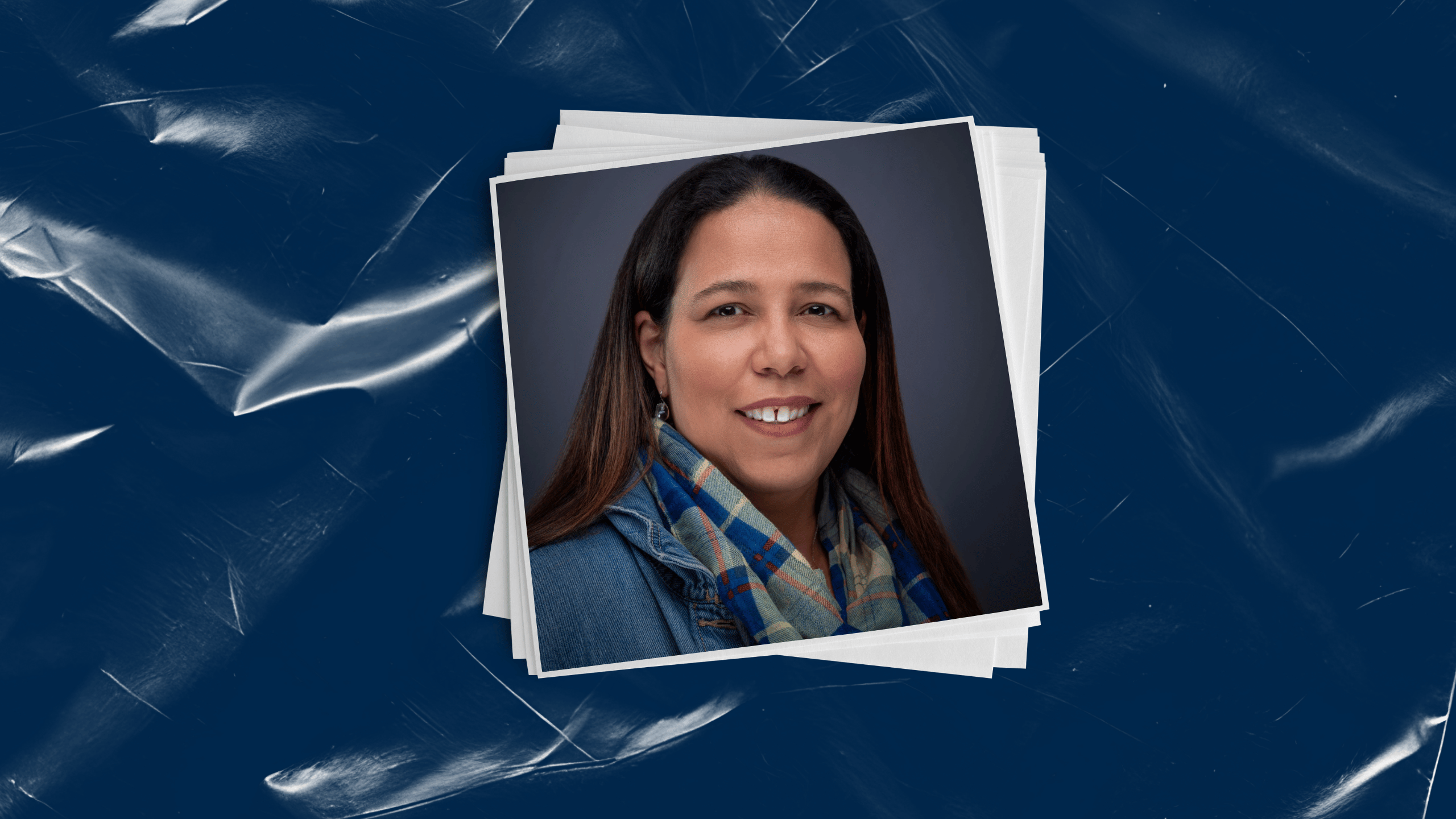
CASE Internship Program Manager
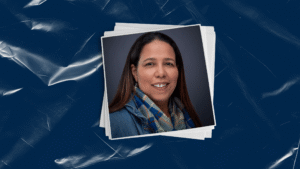
When Amanda Williams talks about her work, she doesn’t start with job titles or program details. She starts with a feeling: the relief on a student’s face when they realize they don’t have to figure everything out alone.
“I want students who walk in saying, ‘I have no idea what I’m doing,’ and to know that is a perfectly good place to start,” she says.
Amanda was born and raised in Flint, and proud of it. A graduate of Northwestern High School, she went on to Baker College to study engineering. She was also a first-generation college student, and she remembers how much she didn’t know about navigating higher education. “I didn’t know what I didn’t know,” she says. “So there was a lot of trial and error.”
Academic advisors and Career Services professionals filled in those gaps. They helped her understand transferable skills, the value of experience, and the possibility of opportunities beyond the path she had imagined. That support changed her direction.
Her career found her, too. As a work-study student in a Career Services office, she helped assemble a resume book. One day, when the career advisors were unavailable, they asked her to help review resumes. “Something clicked,” she recalls. “I loved helping people see strengths they couldn’t see in themselves.”
The student job became an administrative role, and then a career.
She initially joined UM-Flint as the Career Services Advisor for the College of Innovation & Technology. Working with CIT students deepened her understanding of the barriers students face, and eventually led her to CASE as Internship Program Manager. This new role combines what she cares about most: students, experiential learning, employer relationships, and creating opportunities.
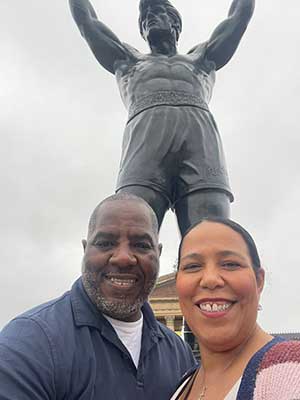
Amanda is a devoted Rocky fan, and the series shapes how she thinks about her work. “I love the scene where Rocky tells his son that life hits hard, but that winning is about how much you can take and keep moving forward,” she shares. “Careers and life don’t always go according to plan. Sometimes you have to adjust, keep moving forward, and be open to where the next opportunity might take you.”
She’s equally inspired by Mr. Rogers and his call to “look for the helpers” during times of strife. “I feel like that’s me to a T,” she said.
Amanda has worked with students at every stage: first-year students, career changers, first-generation students, students with disabilities, and those preparing for graduate school. She meets each student where they are.
Sometimes that means a polished LinkedIn profile or an internship interview strategy. Sometimes it means setting up a voicemail or remembering to check email. It all counts as a starting point. “Everyone is on a different level,” she says. “Some students don’t have access to guidance or mentors around them, and so I try to step in where I can.”
She doesn’t see her job as simply pointing students to a resource. “I think it’s important to look at it holistically — is the resource easy to find, will students understand why it matters, and do they feel comfortable asking for help,” she explains. “I’m trying to break down as many barriers as I can.”
Students’ honest feedback about what feels confusing or intimidating shapes the programs she builds.
Her goal for CASE is to start career development on day one, not in the final semester. She is active in NACE and UM-Flint’s Career Services Network, and she works to keep students from falling through the gaps between offices.
During her time at UM-Flint, Amanda’s favorite moments might seem like small wins, but they’re what she enjoys the most. “Helping a student finish a Handshake profile or to finally feel good about their resume,” she shares. “Gaining their first LinkedIn connection or a nervous student who comes back to say they got the internship I helped them prepare for — those moments might look small from the outside, but they’re often huge for our students.”
When Amanda was younger, she thought of some of her differences as weaknesses; it wasn’t until she was diagnosed with ADHD at 40 that things started to make sense. “I now know how I learn, and how those differences contribute to my strengths. Different doesn’t mean incapable, and I try to bring that experience into my interactions with students,” she says.
Her advice for students is simple. “Ask questions. Use your resources. Build relationships. Try things. Change direction when you learn something new about yourself. Your first job is a starting point, not a final destination.
“If you’re a student who isn’t sure where to start, my door is always open. Start with me, and we’ll figure out the next step together.”