Wyatt Endowed Professor of Public History
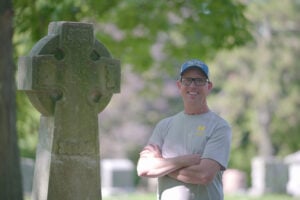
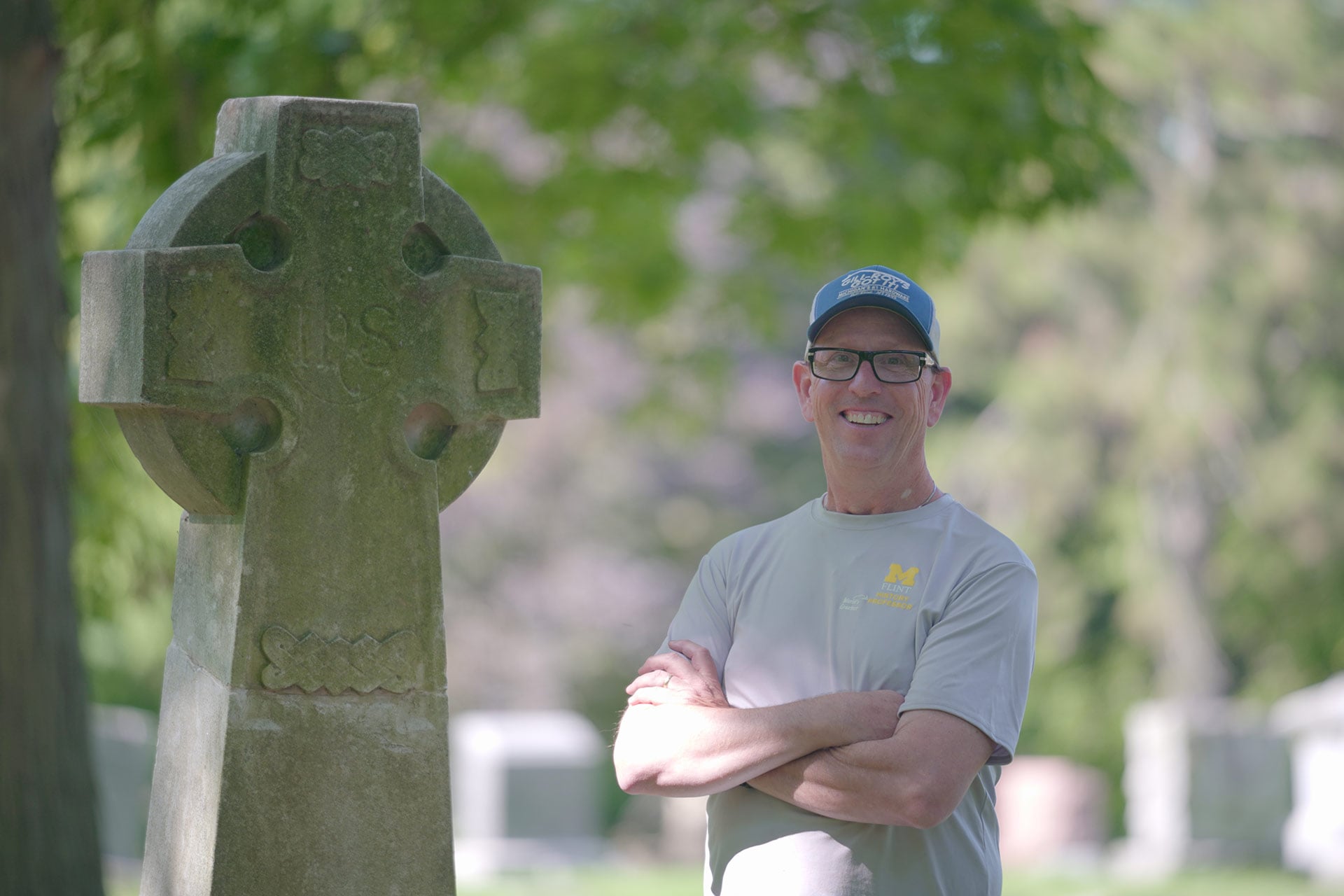
Thomas Henthorn will be the first to tell you his academic journey was anything but straightforward.
“Fun fact — I got kicked out of college the first time I tried it,” he says. Fresh out of high school in Saginaw, Thomas landed at Western Michigan University on a full-ride scholarship that didn’t last. “I had, shall we say, a very active social calendar that conflicted with my academic calendar. After a year and a half, I was out — and I went from a full-ride scholarship at a major university to literally working in an ice factory.”
Thomas quickly pivoted to working at a printing company, where he worked for several years before trying his hand at college again. “I started with community college classes — Delta, Mott, basically wherever I could fit them into my schedule,” he shared. Eventually transferring to Saginaw Valley State University, Thomas discovered he had a knack for history.
“Of all the subjects I studied, it was the only one that really stuck with me. We tend to learn and retain information that we’re passionate about, so it seemed like the right career path. Even though I wasn’t sure what I was going to do with it at first, history is the one thing I can think and communicate confidently about,” he says.
His interest in history led his professional life, but it also added a dimension to his personal life. “Family vacations, we’d end up at some historic fort with my kids rolling their eyes, thinking ‘Ugh, Dad’s talking shop with somebody’ as I was getting into deep conversation at a broom-making stand, or something riveting like that,” he laughs.
Focusing on an original piece of research about St. Agnes Parish in Flint, Thomas’ graduate experience was launched by several incredible mentors. “Getting a PhD is hard, and you need all the support you can get. I was lucky enough to connect with stellar history faculty at Saginaw, who helped me craft a writing sample that became my ticket into Michigan State University’s PhD program, completely skipping a master’s degree entirely,” he shares. “The key was providing them a body of work that demonstrated my capacity for original research, and my mentors at Saginaw helped me achieve that.”
At MSU, he found an advisor, Maureen Flanagan, who “wasn’t gonna let me stick around any longer than I needed to.” He also credits mentor Mark Kornbluh, now provost at Wayne State University, as a formative influence. “The people are the ones that make the difference. When you’re struggling, and you’re like, ‘Why did I basically sign up for intellectual boot camp?’ — the people there to help you and encourage you make a big difference.”
He earned his PhD in urban history, specializing in the Progressive Era — chosen partly, he admits, because “I didn’t want to learn seven languages” for late antiquity, and because the Erie Canal era meant everything was written in cursive. “So I chose the Progressive Era. Lots of typed documents,” he laughs.
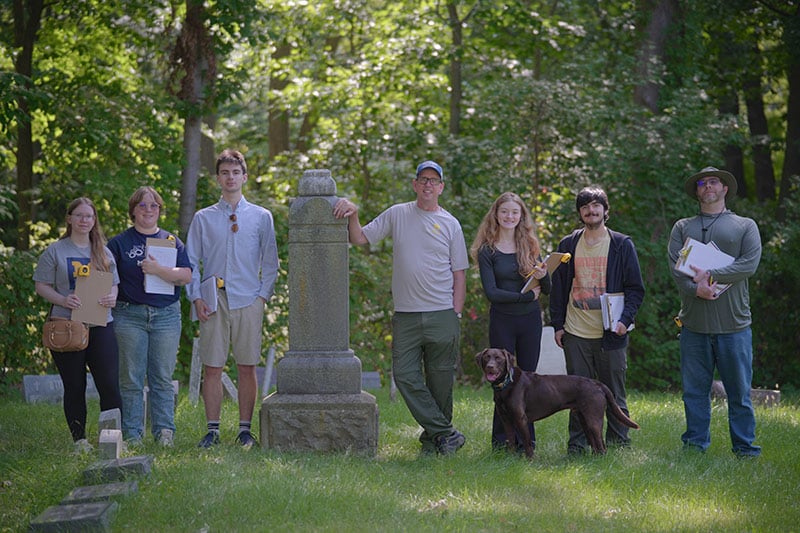
His doctorate eventually led him to UM-Flint around 2009, where he was named the Wyatt Endowed Professor of Public History — a position designed, as he describes it, to put a scholar out in the community rather than behind a desk. “As much as I enjoy a good faculty meeting, the best thing is when I’m out in the community, working with folks, showing up to neighborhood meetings, giving a presentation at a senior center. People thank me, and I say, ‘Well, this is my job. This is what I do.’”
That community-first philosophy shapes everything Thomas takes on. He currently sits on the boards of the Sloan Museum, the Whaley House, and Glenwood Cemetery, among others. He serves on the Diocese of Lansing Cemeteries advisory board, the America 250 Commission for Genesee County, and supports the Michigan Emerging Museum Professionals — even sponsoring a booth at the annual Michigan Museums Association Conference. “The mentoring process often lasts after they get their diploma. It’s a great way to keep in contact with alumni,” he notes.
His active projects reflect the same breadth. He’s co-authoring a new picture history of Flint, arguing that the 1977 version — still ubiquitous at Genesee County garage sales — has had an outsized influence on how people understand the city. He’s also working to reform the field of cemetery preservation, which he believes has been overtaken by social media-driven “before and after” cleaning videos at the expense of planning and long-term stewardship. “My focus is on how we can take the current grassroots energy of cemetery preservation and shepherd it a little bit,” he explains. He’s delivering papers on the subject and working with organizations such as the Michigan Historic Preservation Network to push the conversation forward.
Throughout it all, he’s learned to hold his expertise lightly. “The last thing people need is somebody with a PhD telling everybody they’re doing it wrong. The PhD is a source of historical knowledge — we in the academy tend to think of it as the source, but everybody else just sees it as a source. You have to appreciate the other sources of historical knowledge that are out there.”
Working with students — many of them eager but underprepared — has changed him personally, too. “As somebody who’s had second and third chances in life, I probably should have been a little more open to that earlier,” he shares. “Higher education has given me something that I couldn’t have found elsewhere. Namely, the gift of thoughtfulness. Perspective. Slowing down and actually asking, ‘Hey, what’s going on here?’ I don’t think another profession would have been able to do that.”
And what would he have told his 18-year-old self to get him on this career path? “Nothing. I don’t think he would have listened to it, anyway,” he grins.