Professor of English
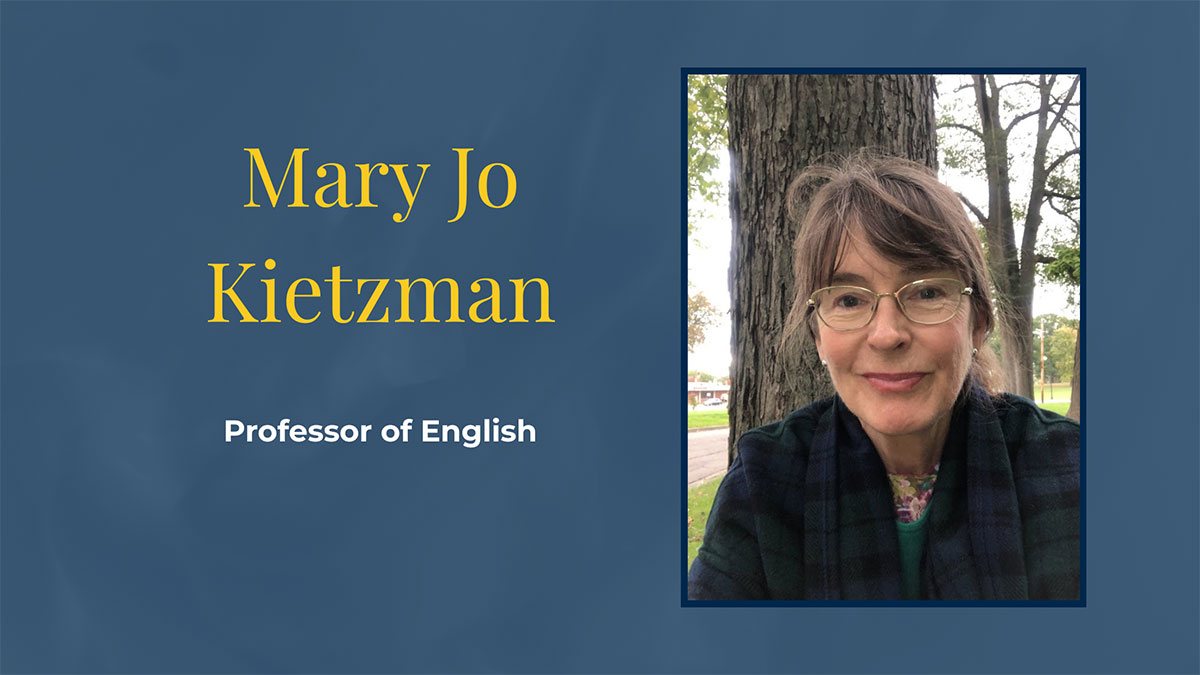
“I want all of my students to feel liberated in what they do; this time must be meaningful for them, not just following a set path or paying for a piece of paper, but a time for them to truly unlock themselves, find their trajectory, and learn how to take what is essential about themselves and share that with the world,” says Mary Jo Kietzman, professor of English at the University of Michigan-Flint.
Even though Mary Jo’s grandmother and mother were both teachers, and she grew up in a household with two women constantly talking about school, she didn’t enjoy traditional education as a child. “I hated it! I couldn’t sit there and do worksheets all day, I felt like I was being socialized just to fill out forms and not to learn anything, so I really rejected it in elementary school,” she recalls. “Eventually, I realized that there was no way out of it, and so I needed to figure out how to make it about more than just getting good grades. It was a strange but really formative experience — and here I am, still in school all these years later!”
At the end of high school, Mary Jo suffered a significant loss: Her father died suddenly in his sleep, and she didn’t know how to process that grief. She had recently discovered Emily Dickinson’s poetry, and it was a revelation. “The language she used spoke to the heart of what I was experiencing, and I began to sort of gravitate toward these literary moments, instinctively, as a way of understanding what I was feeling, even if I didn’t know that was what I was doing at the time,” she explains. “Honestly, I was a little bit lost, but these writers, these characters in these novels, were terrifically influential on me; they almost mentored me as I felt my way through to discovering my vocation.”
During her undergraduate studies, Mary Jo took an architecture course in London that featured Turkish buildings, and she decided to visit them in person. “I really threw myself into things, I think that was part of my grieving process, and maybe I was a little bit reckless, but I wanted to take risks, to push the edges of what I knew,” she shares. “I bought a $50 bus ticket and went to Turkey on my own, without knowing any Turkish, and that made me more vulnerable in a way I don’t think I understood at the time. But taking that risk, going out in the world and discovering things in a new way, that excited me, and I knew I wanted to keep traveling.”
After graduating, Mary Jo continued her studies at Boston College, where she received her PhD in English. “It was a very small program, and was created by a woman who was dissatisfied with the programs at Harvard and other institutions because she thought it was more valuable for the students to have a hand in shaping the curriculum. It was then that I kind of started moving back in time,” she notes.
From more contemporary and modern literature, Mary Jo began studying medieval writers. “I had a wonderful time reading Chaucer — the strangeness of the vocabulary, the lyrical qualities, it didn’t feel dead! It felt alive, like hearing the underwater calls of whales,” she explains. “Around that time, I had a relationship breakup, and so I, again, worked through that loss with literature. This time, it was Chaucer, with whom I felt like I was having this conversation across time. My connection and resonance with literature have always helped me discover aspects of myself that weren’t apparent at the time. It’s something that I encourage my students to explore; that they might not recognize that’s what’s happening as they’re going through the experience, but those moments — when something speaks to us, hits us where we least expect it, surprises us — that’s self-discovery. That is how we grow new parts of ourselves, how we learn to adapt and grow and act more effectively in new situations.”
When Mary Jo joined the faculty at UM-Flint in 1996, she initially taught Shakespeare each semester; however, she subsequently expanded her courses to meet the interests and needs of her students.
“I love working with and teaching in the Flint community, which is mostly working-class, like me, and has had to learn how to adapt to changing circumstances,” she says. “When I first started at UM-Flint, we taught night classes for the factory workers who needed to train for new careers, and it was inspiring to see older students pursue new subjects and skills, to keep on learning. It brought me a new appreciation for the relevance of the humanities. From my perspective, our entire society is at a similar inflection point, and there will need to be a significant shift in how we think about education, learning, and knowledge, as well as the skills that are inherently and uniquely human. The humanities can guide us in that; I know some of my peers don’t think we should have to make a case for why what we teach is important, but I think it’s important for us to do so for our students, to show them how studying literature and art and culture and societies will benefit them in the long run. Because I truly believe that it will.”
After spending time in Kazakhstan as a Fulbright Scholar in 2010, Mary Jo returned to UM-Flint with a newfound love for teaching project-based classes. “I came back to Flint energized by developing curriculum centered on student experience. What do they want to know? What do they bring to this class? Many of my students have never had exposure to literature at this level, and I enjoy working with them to discover how these texts resonate with their own life experiences,” she shares. “In 2013, the class adapted and performed Shakespeare’s ‘King Lear,’ called ‘Lear, Reassembled,’ which was set in Flint and explored the economic and social challenges of that time. There was a lot of violence happening in the community — shootings and arson — and the factory closures were really fresh. Everyone in that play is thrust out of their roles, everyone is lost, and they’re all forced to rebuild. So, imagining that within the context of Flint was inspiring for all of us.”
Mary Jo has continued her creative adaptation approach, using Shakespeare and other classic literature as a framework for student exploration. A subsequent class adapted ‘As You Like It’ to ‘As You Like Flint,’ which addressed the experience of living in Flint during the height of the Water Crisis. Her most recent Shakespeare course, in Winter 2025, involved adaptations of scenes from five different plays by the Bard, with students bringing his ideas and language into the 21st century.
“One thing that concerns me with many of my students today is their aversion to risk, of needing to know how things are going to unfold before you even start it. Now, in some cases, that makes sense, there are safety considerations, but when you’re talking about something like reading a book, you don’t need to know what it’s about before you read it, that’s part of the process,” Mary Jo says. “There are things that you will discover along the way, and some of them will take your whole life to understand. And that’s good! Focus more on the journey than on the destination.”
Mary Jo’s Creative Highlights
- Biography of Mary Carleton – Mary grew up in a working-class family during the English Civil War, and she made her way up in English society, first by passing herself off as a German princess in order to marry an aristocrat. She was eventually exposed as a fraud and then disappeared for a time, resurfacing in the criminal underworld. “After I discovered her story at the end of graduate school, I went on a fellowship to London and researched her life through court records and archives. She was a fascinating character and could be considered an early feminist. After she was arrested, she wrote all kinds of appeals and requests for pardons, and a lot of her points were rooted in the fact that the system was rigged against women. She inspired me because she was an ordinary girl who lived out a fantasy self. Samuel Pepys praised her wit and her spirit when he attended her trial.”
- Guide to Saginaw Valley – Inspired by the New Deal-era Federal Writers’ Project, Mary Jo has collaborated with a team of over 20 writers, including faculty members, students, and alumni, to develop a guide to the region. The project began in 2021, and the guide is currently scheduled for publication in Spring of 2026. “One of my primary goals of this project is to demonstrate that the humanities are essential, and that students who study these disciplines are skilled in interviewing, building relationships, collaborating, project management, creative idea generation, and explaining sometimes complex things in new and engaging ways.”
“The human brain is built for searching and discovering.
Mary Jo’s Insights
Most of us don’t have to hunt and gather anymore, so we need to use that curiosity in a different way!
How are we using our brain’s hardwired seeking system?
If we don’t fuel it, I think we fall into ruts, sometimes depression, because we need that newness, that novelty.
Even if — especially if! — we don’t know if we can or how to go about doing something, it makes it more exciting.
The challenge itself is enlivening.”
Flint Faves
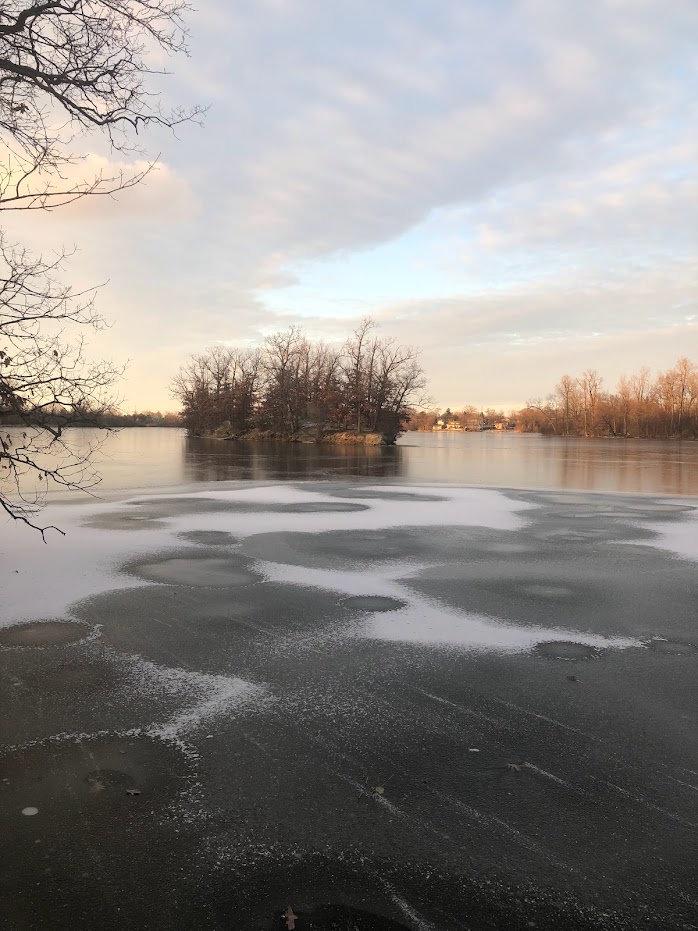
Thread Lake Park. “All of the parks in Flint are wonderful places, but this one is a particular gem. It was previously home to an amusement park and is about five minutes from campus.”
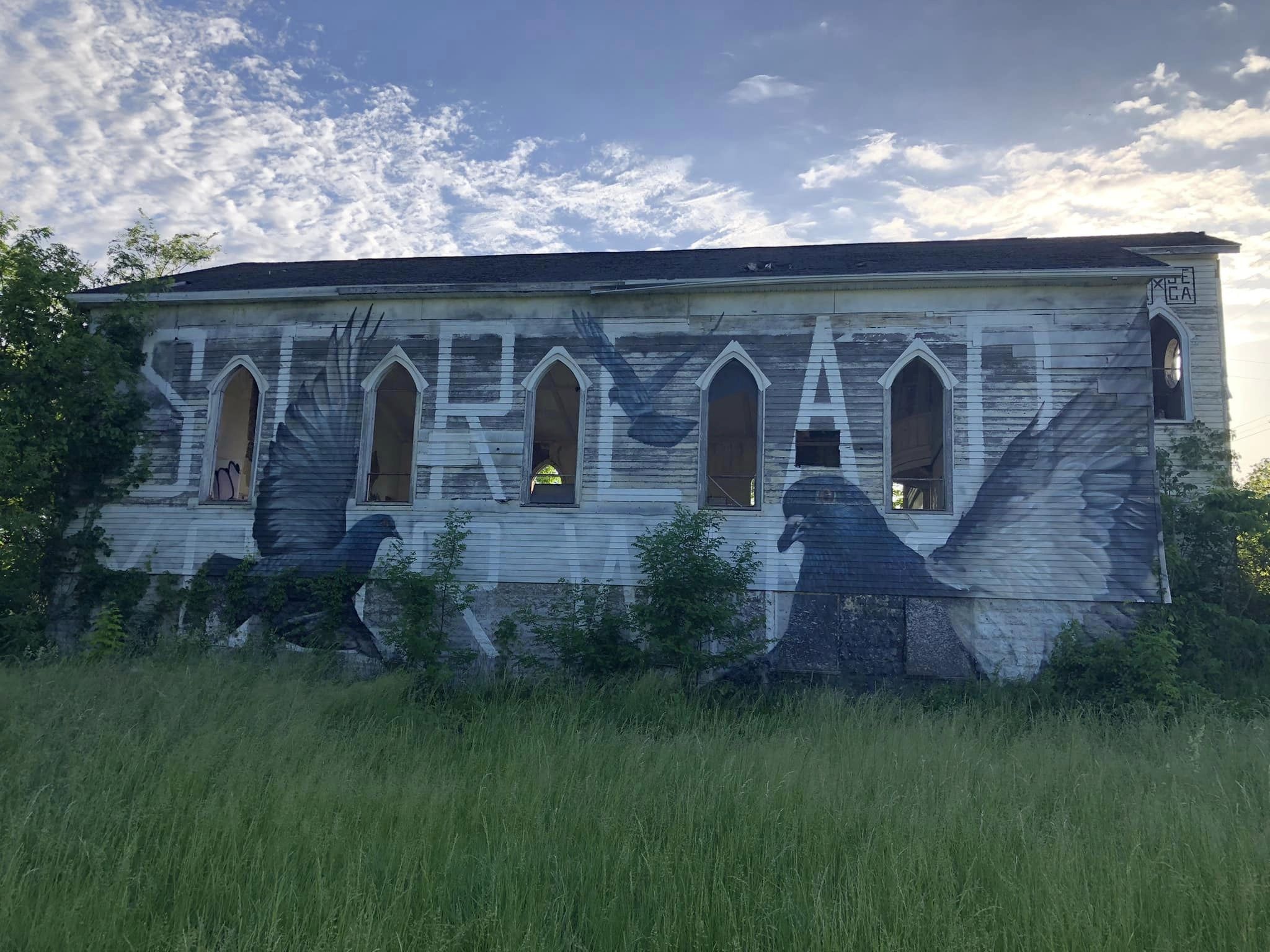
Gillespie Street Church. “This was originally built in 1915, and it was a Russian German church; by the 1960s, it had become the Nation of Islam mosque, then eventually it was the Flint mosque. It’s gorgeous, kind of a ruin, but has an amazing mural of flying pigeons on the outside.”
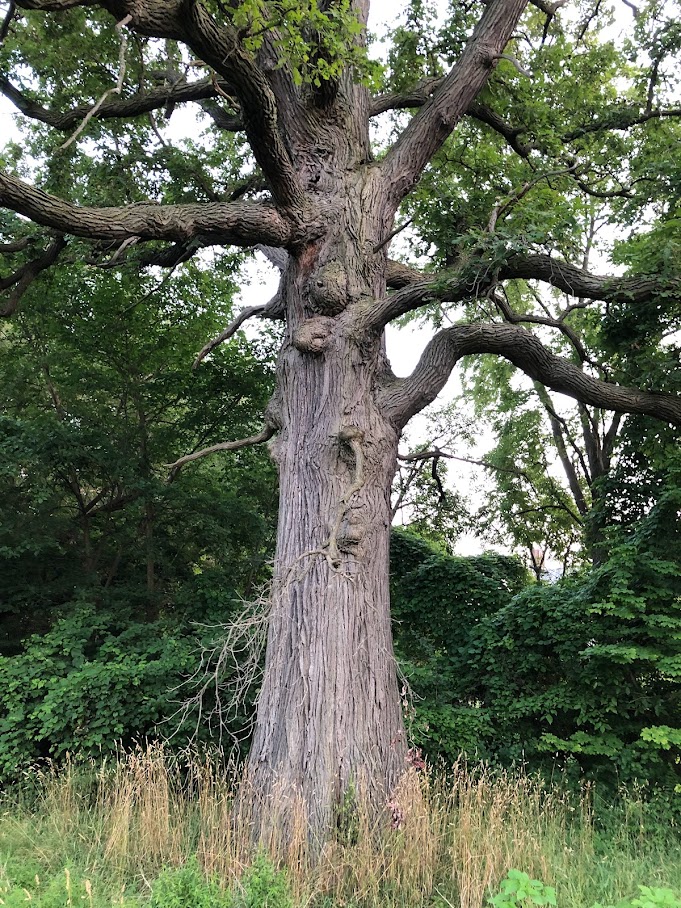
Oak Openings. “One of the area’s ancient landscape features is these large oak trees, and the indigenous community here would plant crops in the opening between them. There are still several around the Flint Cultural Center grounds, by the School for the Deaf. But some of them have, unfortunately, been cut down. I think that’s one of the reasons I was motivated to write a guide to the area, so we could recognize these natural treasures and historic structures. Instead of razing them because they are considered blight, we should save them. They’re our history.”
Flint in Three Words?
“Flint is a really complex place, I don’t think I can sum it up in three words! It is so rich, with many artifacts of our past still standing, but it also offers numerous openings for people to meet, come together, create, and make new things happen. I wouldn’t live anywhere else.”