“I have no performance experience, but working with these scripts draws me in and makes me want to act,” said one student midway through this past semester’s ENG315: Shakespeare course.
There is a reason that Shakespeare’s work has stood the test of time and is regularly adapted and produced around the world: His words continue to reflect much of the human experience. UM-Flint students spent the semester exploring and discussing five of Shakespeare’s works — “Titus Andronicus,” “Henry IV Part One,” “Twelfth Night,” “Hamlet,” and “The Winter’s Tale” — and were then tasked with writing one or two scenes that carried forward something they found hopeful or inspiring in the work.
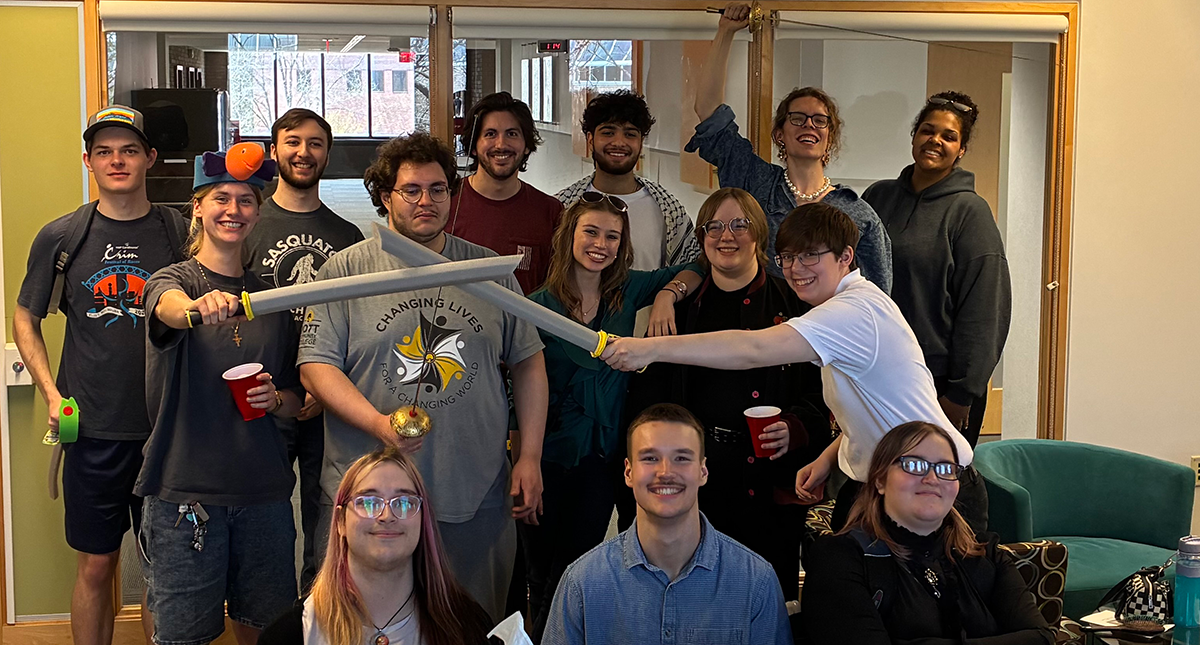
Working in groups over the last two weeks of the semester, the students wrote original scripts that connected with modern sensibilities. The students created a dynamic learning community that helped them develop relationships beyond the classroom.
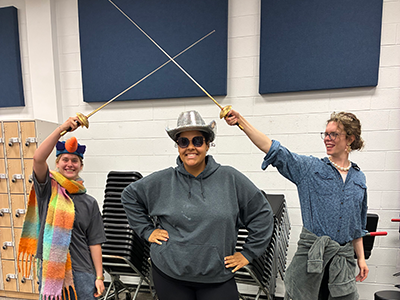
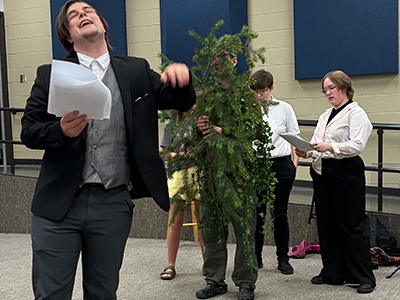
“I witnessed them perform plays about ending cycles of violence, making peace, finding community, bridging the class divide, and creating a Commonwealth. These five beautiful creations were written in emotional, thoughtful, metaphoric language by 20 students from various majors,” said Mary Jo Kietzman, professor of English. “As I listened, on the edge of my seat, I heard language we need now: a language of imagination, thinking, and dreams, not a bureaucratic language filled with data points and jargon. No AI can reproduce the kind of soulful language they wrote, and I am grateful to Shakespeare for helping students learn this generous, rich, and idiosyncratic human language.”
Completing this assignment required deep reading, problem-solving, ethical reasoning, teamwork, leadership, and oral and written communication skills — all skills the College of Arts, Sciences & Education hopes to help each student develop.
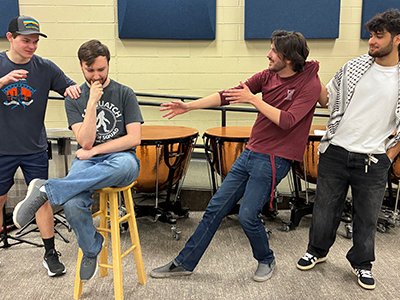
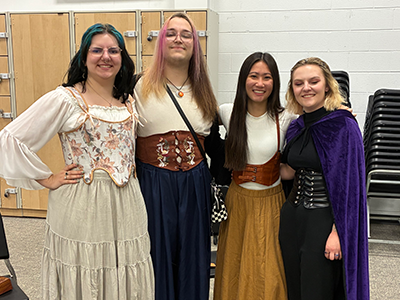
“Another revelation was when the students realized how easily they may have missed out on ever reading Shakespeare, as literary studies are somewhat of an endangered species in our STEM-industrial curriculum and technology-driven world,” Kietzman said. “Preserving our culture isn’t just about taking classes in various disciplines — history, philosophy, literature — it’s about learning to carry artifacts with us and share them in new ways with others. That is how culture evolves and grows with us, and it requires intentionality and intensity — both of which I saw in our students, and it gives me a lot of hope.”